Specify
Create a URS, label-roll record, product matrix and site survey.
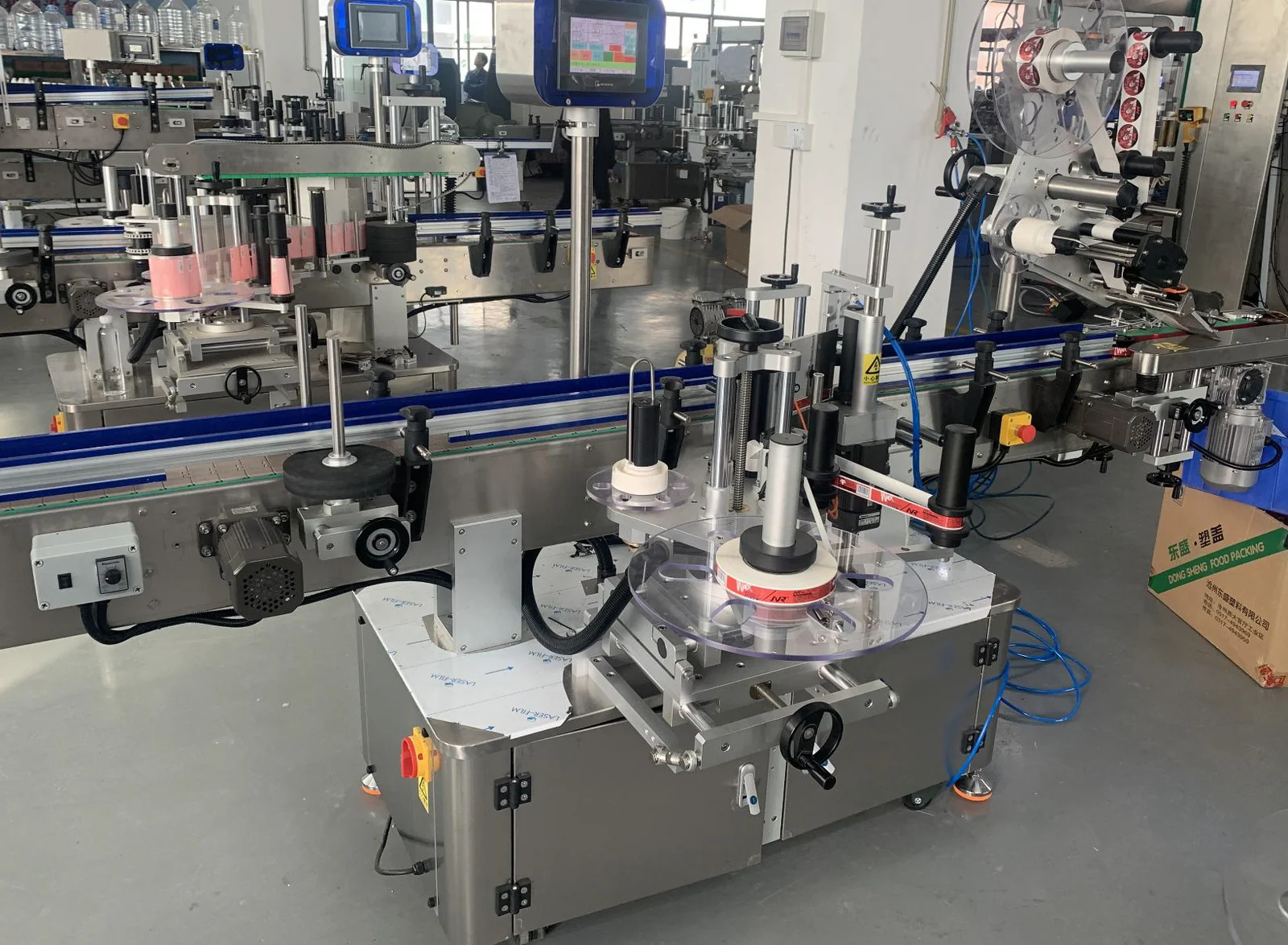
Practical guidance to help buyers shortlist the right labelling system before requesting a quotation.
How to choose a labelling machine for bottles, cartons, pouches, flat products and pallets.
GuideGuide to wrap-around and round bottle labelling machines for jars, bottles and cylindrical containers.
GuideGuide to double-sided and twin-side labelling machines for flat, oval and square containers.
GuideGuide to print and apply labelling machines for variable data, cartons, cases, logistics and pallets.
GuideChecklist of label roll, container and production information to send before requesting a labelling machine quotation.
GuideCompare bottle labelling routes for round, oval and shaped bottles.
GuidePlan conveyor-fed labelling for higher-output production lines.
GuideLower-investment routes for small batches and flexible production.
GuideTop labellers for pouches, boxes, cartons, cards and flat packs.
GuidePrint and apply labelling for pallets, cartons and logistics workflows.
GuideRetrofit label heads and applicators for existing lines.
GuideUnderstand machine cost factors before comparing quotations.
GuideCommon causes of poor label placement and unreliable application.
Extra buyer-intent guides for specification, troubleshooting, label rolls, barcodes, line layout and machine comparison searches.
Checklist for specifying a labelling machine: container, label roll, output, line layout, coding and changeover details before...
Specification guideInformation to include in a labelling machine RFQ so suppliers can quote the correct equipment and avoid assumptions.
Specification guideGuide to product and label sample testing before buying a labelling machine, including container variation and label placement...
Specification guideSite survey checklist for labelling machinery projects, covering line space, access, utilities, product flow and installation c...
Specification guideHow to plan labelling line layout around conveyors, product presentation, accumulation, coding, inspection and operator access.
Specification guideGuide to labelling machine output, packs per minute, product spacing, label length, printer speed and real line throughput.
Specification guideHow to plan changeovers on a labelling machine for multiple SKUs, label sizes, container shapes and operator routines.
Specification guideFactory and site acceptance checklist for labelling machinery, including trial packs, label placement, speed and handover checks.
Specification guideMaintenance schedule guide for labelling machines, including rollers, belts, sensors, unwind units, print engines and cleaning...
Specification guideCritical spares list for labelling machines, covering belts, sensors, rollers, peel plates, printer parts and common wear items.
Specification guideGuide to label roll unwind direction for automatic labelling machines, including core size, edge leading and artwork orientation.
Specification guideHow label core size, outside roll diameter, web width, gap, backing material and unwind direction affect labelling machine choice.
Specification guideGuide to label gap sensing, label registration, transparent labels, black marks and common sensor setup issues on labelling mac...
Specification guideHow label material, stiffness, adhesive, backing paper and environmental conditions affect automatic label application.
Specification guideHow bottle, jar, pouch, carton and pallet shape affects labelling machine type, label position and product handling.
Specification guideGuide to label placement on round bottles, including wrap control, seam position, label gap and container stability.
Specification guideSpecification guide for oval bottle labelling machines, including side control, label placement and front/back label matching.
Specification guideGuide to labelling square bottles and rectangular containers using side, front/back or wrap-around style machine routes.
Specification guideCommon tapered bottle labelling problems and checks for skew, wrinkles, label tracking and container orientation.
Specification guideTroubleshooting guide for skewed labels on bottles, including product control, sensor timing, label web tension and wipe-down i...
Specification guideCommon causes of wrinkled labels on bottles and packs, including material, wipe-down pressure, container shape and label timing.
Specification guideGuide to label applicators with conveyors, including product triggering, side guides, speed matching and line integration.
Specification guideGuide to print and apply barcode labelling for cartons, cases and pallets, including data, print quality and label placement.
Specification guideGuide to GS1 pallet labelling system specification, including SSCC labels, corner wrap placement and warehouse data flow.
Specification guideGuide to SSCC labels for pallets, cases and logistics units, including print and apply equipment and data checks.
Specification guideHow barcode verification and scanning can be built into labelling lines for cartons, cases, pallets and variable data labels.
Specification guideGuide to combining date coding, batch coding and label application on bottles, cartons, pouches and cases.
Specification guideGuide to batch code label applicators for products needing variable data, date codes, lot numbers or traceability labels.
Specification guideGuide to top labelling machines for pouches, cartons, tubs, lids, trays, boxes and flat products.
Specification guideGuide to side labelling machines and side label applicators for bottles, cartons, cases and flat-sided products.
Specification guideGuide to top and bottom labelling machines for products needing labels on both faces in one controlled pass.
Specification guideChecklist for buying a wrap-around labeller, including bottle control, label gap, wrap accuracy and changeover requirements.
Specification guideChecklist for front and back labellers, including side control, label matching, bottle shape and twin-head setup requirements.
Specification guideGuide to labelling flat products such as pouches, boxes, cards, cartons, lids, trays and packs.
Specification guideGuide to carton and case labelling machines, including print and apply, barcode labels, side labels and top labels.
Specification guideGuide to pouch labelling machines and label applicators for flexible pouches, sachets, bags and flat packs.
Specification guideGuide to jar labelling machines for glass jars, plastic jars, food jars, cosmetic jars and cylindrical containers.
Specification guideGuide to labelling machines for small businesses, start-ups and lower-output production, including semi-automatic options.
Specification guideGuide to labelling machinery for contract packers handling frequent changeovers, customer labels and multiple pack formats.
Specification guideGuide to high-speed inline labelling machines, including product handling, speed limits, label accuracy and line integration.
Specification guideChecklist for semi-automatic labellers, including operator loading, product range, label roll setup and production volume.
Specification guideChecklist for automatic labellers, including conveyor control, product spacing, label accuracy, coding and integration requirem...
Specification guideCompare print and apply labellers with standard label applicators for pre-printed labels, variable data, barcodes and logistics...
Specification guideGuide to retrofitting a label applicator head to an existing conveyor or packaging machine.
Specification guideWhat product samples, label rolls and data to send for a labelling machine trial before quotation or acceptance testing.
Specification guideHow to place a labelling machine within a packaging line around filling, capping, coding, inspection, conveyors and packing.
Specification guideGuide to clean-down considerations for labelling machines used with food, cosmetics, chemicals and dusty production environments.
Specification guideTroubleshooting guide for labelling machines not feeding labels, including sensors, web path, tension, peel plate and label rolls.
Send product photos, bottle dimensions, label sizes and target output. Lancing UK can help shortlist the right machine type before quotation.
Focused pages for UK buyers searching by machine type, pack format and industry.
UK bottle labelling machines for round, flat, square and shaped bottles. Specify wrap-around, front and back, top, ...
GuideAutomatic bottle labelling machines for UK manufacturers needing conveyor-fed wrap-around, front and back, top or t...
GuideSemi-automatic bottle labellers for low to medium volume production, start-ups, short runs and multi-SKU labelling ...
GuideRound bottle labelling machines for wrap-around labels on bottles, jars, tins and cylindrical containers....
GuideWrap-around labelling machines for cylindrical bottles, jars, tins and containers. Semi-automatic, compact and auto...
GuideFront and back labelling machines for flat, oval and rectangular bottles requiring two labels in one pass....
GuideDouble sided labelling machines for bottles and containers needing accurate two-sided label application on one conv...
GuideFlat bottle labelling machines for oval, rectangular and flat-sided containers needing side or top label applicatio...
GuideTop labelling machines for boxes, lids, tubs, trays, pouches, cartons and flat products....
GuideTop and bottom labelling machines for products requiring labels on both upper and lower faces in one handling proce...
GuideLabel applicator machines and retrofit label heads for applying self-adhesive labels to products, conveyors and pac...
GuidePrint and apply labelling machines for cartons, cases, pallets and variable data labelling in UK production and log...
The most useful route is to define the pack and label, choose the application method, prepare samples, agree the acceptance test and only then compare individual machines or investigate recurring faults.
Compare round, front/back, flat-product, shaped-container and print-and-apply routes.
InputsGather dimensions, material, label roll construction, required position and line information.
EvidenceUse the extremes of the product range and normal production labels rather than idealised samples.
AcceptanceAgree formats, changeovers, placement references, line interfaces and retained evidence.
UptimeSeparate product, label, setup, sensor, handling and wear causes before changing several settings at once.
LifecycleKeep the web path, peel plate, rollers, belts, sensors and print equipment clean and inspected.
Use the same dimension sheet, marked samples, production label rolls, output definition and acceptance references throughout the project. This prevents a machine comparison, sample trial and final acceptance test from being based on different assumptions. Add photographs or drawings that identify the datum used for placement, and retain the approved sample with the project record for commissioning and later troubleshooting.
Send the completed pack, label, output and line information with representative samples. Lancing UK can then direct the enquiry to the correct commercial product page.
The strongest enquiry moves from machine route to sample proof, site integration, acceptance and handover. The final technical guides below connect those stages without replacing project-specific engineering.
Create a URS, label-roll record, product matrix and site survey.
Use representative samples, FAT tests, vision or barcode checks where required.
Agree controls, interlocks, guarding boundaries and line recovery.
Close the project with settings, backups, documents, training and spares information.
Production handshakes, product flow, faults and restart.
SafetyAccess, safeguards, isolation and competent site review.
HandoverManuals, drawings, settings, backups and acceptance records.
UptimeControlled response to jams, data faults and power interruption.
URSWrite traceable requirements and acceptance evidence.
FATTest formats, changeover, faults, interfaces and documents.
Send the product, label and line information so the most suitable labelling route can be checked before quotation.
Use these resources when the machine category is known but the product flow, verification, pack geometry, adhesion or maintenance scope still needs to be defined.
Plan spacing, stabilisation, handovers, accumulation, inspection and safe access.
Data & qualityDefine the data chain, print evidence, symbol checks and failed-label response.
ApplicationMatch label shape, orientation and application method to the actual surface.
MaterialsTest substrate, contamination, temperature, moisture, curvature and dwell.
SupportBuild safe routine checks, records and a recovery-focused spare-parts list.
SpecificationTurn commercial and engineering needs into an auditable project scope.
Use these pages when the machine name is not yet clear or when the documentation scope is as important as the label application.
Match pressure-sensitive label application to product geometry, sensing, label rolls, automation and line handling.
Comparison guideCompare manual peel-and-present, semi-automatic and conveyorised automatic routes.
Validation guidePlan qualification evidence, responsibilities, FAT/SAT reuse and electronic-record boundaries.
Extra buyer guides covering label quality, sensors, commissioning, changeovers, print-and-apply data and total cost of ownership.
Clear film labels can be attractive, but they are also one of the common reasons a standard applicator struggles during.
Application guideNo-label-look packaging usually needs careful control of label presentation, static, wipe-down pressure and label.
Application guideLabels that work by hand can still fail on an automatic line if surface finish, temperature, moisture, label memory or.
Application guideA labelling machine can only present labels as consistently as the roll allows. This checklist covers the roll details.
Application guideOrientation labelling is different from simple wrap-around labelling. The machine has to detect or control the.
Application guideThe right application method depends on product control, label size, speed, surface shape and whether the applicator.
Application guideVision can help confirm that labels are present, positioned and readable, but it should be specified around the real.
Application guideRetrofitting is often more practical than replacing a whole line, but the existing conveyor, controls, product spacing.
Application guidePayback is not only about labour. A better labelling system can reduce rework, improve presentation, remove bottlenecks.
Application guideA clear URS helps suppliers quote the right labelling equipment and reduces the risk of missing key constraints until.
Application guideCommissioning goes more smoothly when the site, samples, labels, utilities and operators are ready before the machinery.
Application guideThe best labelling machine still depends on operators understanding set-up points, label roll loading, changeover,.
Application guideAftercare should be considered before purchase. Rollers, belts, sensors and printer consumables can all influence.
Application guideWrap-around label accuracy depends on the container, label stiffness, label length, bottle rotation and the way the.
Application guideFront/back label alignment depends on product control, side belts, label head timing and container consistency. The.
Application guideTop labelling looks simple until product feed, skew, height variation or label wipe-down pressure creates inconsistent.
Application guideBottom labelling requires space to expose the base of the pack while keeping the product controlled. It should be.
Application guidePallet labelling depends on where the label needs to be scanned, how pallets arrive, and whether one, two or adjacent.
Application guidePrint-and-apply projects need the mechanical applicator and the data path to be specified together. A correct label in.
Application guideThe fastest quoted speed is not always the best production speed. The useful speed is the speed that keeps labels.
Application guideA structured labelling machine project plan helps keep the buying process focused on product data, label data, output,.
Application guideTwo labelling quotations can look similar while including different levels of product handling, sensors, conveyors,.
Application guideCleaning and changeover details affect real production output, especially where labels, containers and products change.
Application guideLabel misalignment is usually caused by product control, label presentation, sensor settings, material issues or.
Application guidePoor label web tracking can create skew, missed labels or inconsistent presentation. It should be checked alongside.
Application guideServo label applicators can improve control and repeatability when the application needs accuracy, repeatable recipes.
Application guideAn RFI helps narrow a supplier shortlist before a detailed quotation. It should include product formats, label formats,.
Application guideA labelling FAT should test real containers, real label rolls, line speed assumptions, changeover points and the faults.
Application guideA site acceptance test confirms the labelling machine performs in the real line environment, with site conveyors,.
Application guideLabelling often becomes the visible bottleneck because every upstream product must pass through it. The true cause may.
Application guidePrivate-label work needs a labelling setup that can change products, labels and batch information quickly without.
Application guideSeasonal and promotional labels put pressure on changeover speed, label roll control and accurate set-up across many.
Application guideContract manufacturing lines need flexible labelling equipment because customers, label formats, pack shapes and batch.
Application guidePrinter resolution should be chosen around the label size, barcode density, text size and scanning requirement, not.
Application guideScanner integration can help confirm label readability and data accuracy when print-and-apply or barcode labels are.
Application guideThe purchase price is only one part of labelling automation. Changeover time, label waste, rework, spares and downtime.
The guide library is most useful when it is used as a project sequence: define the application, collect evidence, choose the route, then write acceptance requirements.
Start with the buying guide when the machine route is not yet clear. Move to the relevant product, sensor or application guide once the pack shape and label position are known, then use the site-survey, controls, FAT and handover guides to define delivery and acceptance.
The questions hub provides a second route organised around the exact decision a buyer is trying to make.
Convert each relevant guide point into a statement, drawing, sample or test requirement. Record the product range, label range, intended rate, line interfaces, utilities, changeover expectation and acceptance method in one controlled brief.
A supplier can then respond against the same evidence, making omissions and assumptions easier to identify.
Questions involving stability, taper, flexing, transparency, label release, surface finish, adhesion, orientation or final appearance normally need samples. Dimensions and artwork are useful, but they do not reproduce how the product behaves under guides, belts, rollers and label pressure.
Use representative production samples whenever the answer depends on contact, sensing or material behaviour.
Before a site survey, identify the preferred line position, product flow, surrounding machines, intended operator side, utilities, access route and any unresolved control or safety boundary. The survey can then verify facts rather than becoming the first time the project scope is discussed.
Bring the current layout and the largest machine access constraint into the survey pack.
Record approved samples, settings, recipes, drawings, signal schedules, test results, training records and outstanding site actions in a controlled handover pack. The documents should show the accepted operating condition and the method for returning to it after a changeover or fault.
Handover evidence is most valuable when it is created during the project rather than reconstructed after installation.
Send the product, label and line details to Lancing so the answer can be checked against the real pack rather than treated as a generic machine assumption.