Why does pallet label height, side application, corner-wrap and barcode scanning matter?
It affects machine choice, label accuracy, line speed and the risk of rework. It should be confirmed before equipment is quoted.
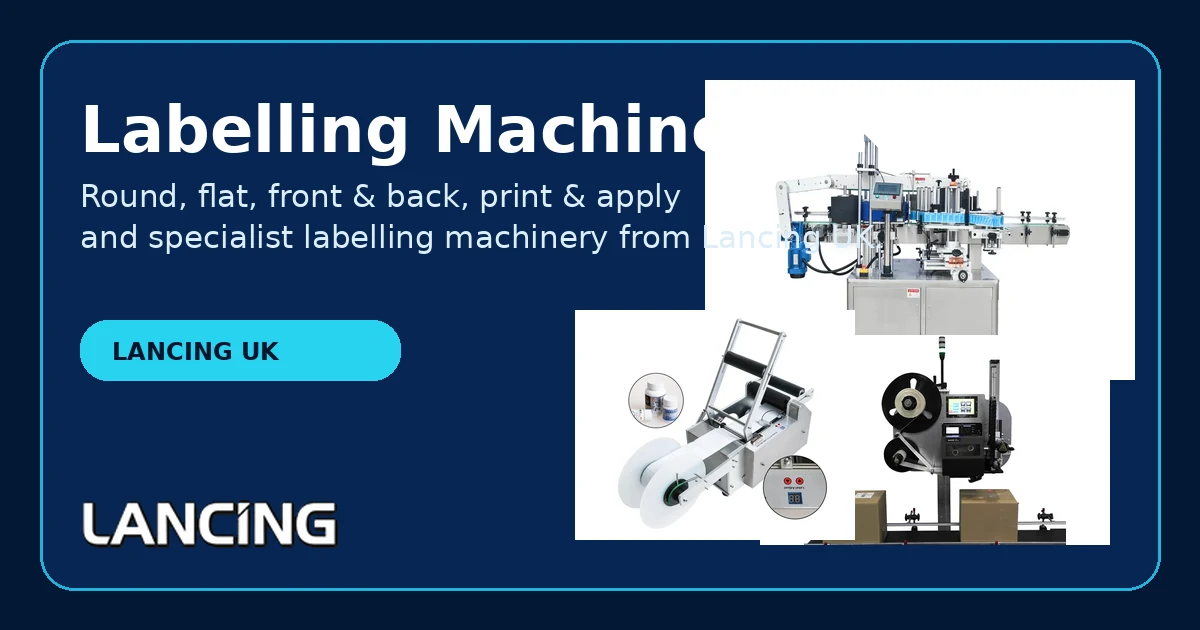
Pallet labelling depends on where the label needs to be scanned, how pallets arrive, and whether one, two or adjacent sides need labelling.
Pallet labelling depends on where the label needs to be scanned, how pallets arrive, and whether one, two or adjacent sides need labelling. It is important because pallet label height, side application, corner-wrap and barcode scanning can change the required label head, product handling, sensor choice, conveyor layout, operator access and acceptance test.
Many labelling quotations fail to capture the difference between a machine that can apply a label during a demonstration and a machine that will run reliably with live products, live labels and real operators. The details below help turn a broad enquiry into a specification a supplier can work with.
Choose the simplest machine that will still control the product correctly. Round containers generally need reliable rotation and wrap pressure. Flat, oval or rectangular containers need side control and repeatable label-head timing. Flat products, boxes and pouches need stable presentation to the label head. Case and pallet applications often depend more on data integration and print quality than on the applicator alone.
When comparing suppliers, check what is included: product handling, conveyors, sensors, printer integration, installation, training, spares and aftercare. A lower machine price can become expensive if the application needs extra controls or support after delivery.
It affects machine choice, label accuracy, line speed and the risk of rework. It should be confirmed before equipment is quoted.
Confirm pack dimensions, label roll details, label position, output target, surface condition and any coding, inspection or conveyor integration requirements.
Yes. Lancing UK can review product and label information and recommend a suitable labelling machine route for the application.
Use these pages to compare equipment routes and prepare a better enquiry.
Compare labelling routes for round, oval, square and shaped bottles.
RelatedAutomatic inline bottle labelling options for production environments.
RelatedApply labels to bottles, boxes, trays, pouches, cases and pallets.
RelatedStart with pack format, label position, output and support needs.
RelatedUnderstand what affects machinery pricing.
RelatedSend samples and project details for advice.
Send the application details and samples so the correct machine route can be checked before quotation.
Pallet labelling is a reach and presentation problem as well as a print task. The system must find a usable surface on loads that may vary in height, position, wrap, edge profile and stability, then apply the correct label where scanners and trading partners expect it.
State whether one face, two adjacent faces or another customer-specific arrangement is required. The applicator travel and pallet orientation depend on this decision.
Provide minimum and maximum height, width, depth, overhang, underhang and positional tolerance. Include stretch wrap, corner boards, straps and protrusions.
A technically correct position can still fail if wrap is loose, the surface is recessed, a strap crosses the label or forklift handling damages it.
First prove the label can be printed and applied to the physical load. Then verify that the identifier and barcode meet the required data standard.
Use the table to turn a broad requirement into evidence that can be reviewed during sample trials, FAT, installation and handover.
| Area | What to establish | Practical check |
|---|---|---|
| Pallet/load envelope | Minimum/maximum dimensions, overhang and position | Applicator reach and collision clearance |
| Required label faces | Short side, long side, adjacent faces or customer rule | Machine orientation and application sequence |
| Surface condition | Stretch wrap, boxes, voids, straps and corner protection | Contact method and label adhesion |
| Placement reference | Height from base and clearance from vertical edge | Site/customer acceptance and scanner access |
| Data/identity | SSCC or other identifier and source system | Correct unique data associated with the physical load |
| Verification | Read, grade, presence or reject/hold requirement | Defined evidence before despatch |
Continue with the pages that address the next technical or commercial decision.
Review print, apply, reach and verification as one cell.
StandardsUnderstand SSCC and logistic-label context.
DataMap identifiers and source-system ownership.
MachineReview the guarded automatic pallet-labelling route.
Send the product, label and line information so the most suitable labelling route can be checked before quotation.