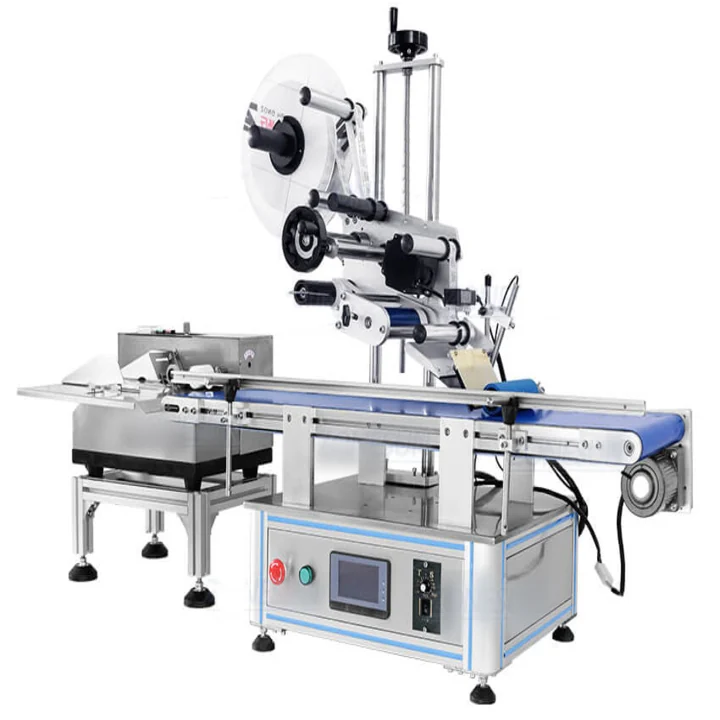
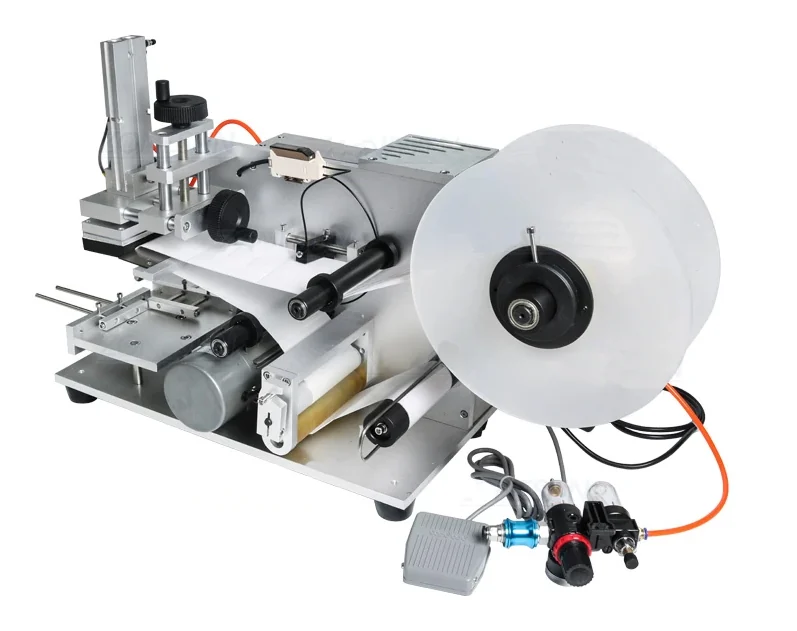
Product feed
State whether products arrive singly on a conveyor, are hand-loaded, or need a feeder. Include thickness, stiffness, surface finish and the risk of overlapping or double feeding.
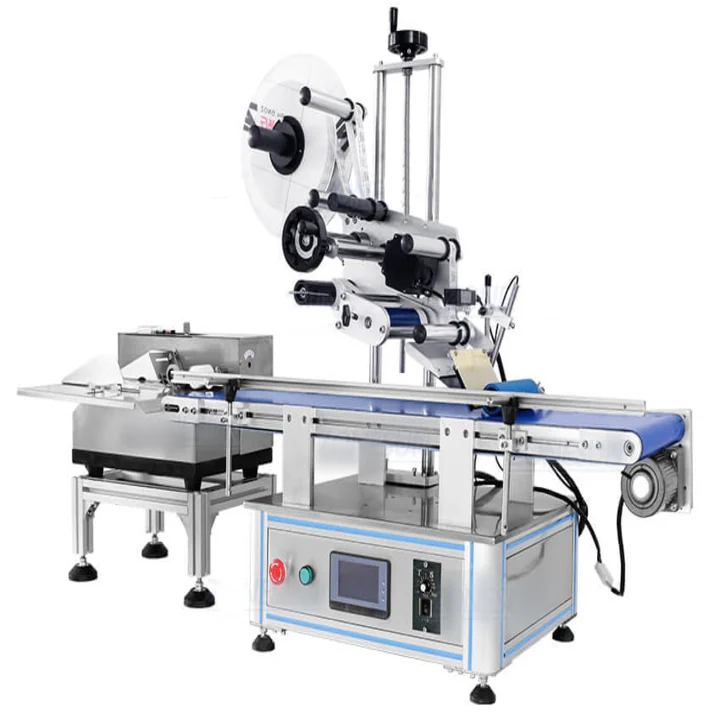
Flat surface labelling is used for pouches, bags, cartons, cards, lids and boxes. The product must be fed squarely and the label head must be positioned to maintain contact without dragging or lifting the pack.
Use these machines as a shortlist starting point, then send sample details for a project-specific quotation.
Flat Surface & Top Labelling Machines should be selected around product handling, label roll data, required label position and the real production speed needed after changeover. A good specification should also confirm operator access, cleaning, guarding, conveyors, coding and spare parts before the machine is ordered.
Send your container, label and production details and Lancing UK can advise which machine range is the best fit.
Pouches, bags, cartons, cards and lids can all accept a top label, but they do not travel in the same way. Flexible products may need separation and flattening; rigid cartons need square feeding; small parts may need a fixture or feeder. The labeller should be selected around the complete presentation method, not the label head alone.
State whether products arrive singly on a conveyor, are hand-loaded, or need a feeder. Include thickness, stiffness, surface finish and the risk of overlapping or double feeding.
The peel point, wipe-down device and conveyor support must keep the product flat while the label transfers. Recesses, raised seams and flexible surfaces should be included in sample trials.
Define the leading edge and side datum used to measure placement. For printed cartons or pouches, supply artwork or marked samples showing the acceptable label area.
If a coder prints on the label or pack, confirm its position and available dwell time. Label-present sensing and vision inspection are separate functions and should be specified separately where required.
Use top-and-bottom equipment when both faces must be labelled in one pass. Use a side applicator where the product is presented vertically, and use print and apply when the label information changes for each pack or batch.
Include product dimensions, production label rolls, normal output, changeover range, line layout and the required label position. Lancing UK can then check whether this range is the correct commercial route.
Boxes, pouches, cards and trays must be presented flat and consistently spaced. The feed method and product trigger often matter more than the label-head capacity.
Decide whether products arrive on a conveyor, stack feeder, friction feeder or manual presentation.
Flexible packs may need a firm backing surface; uneven cartons can change the distance to the peel plate.
Confirm colour, transparency, leading edge and spacing so the trigger remains repeatable.
Select a wipe, roller or tamp route that suits the surface and does not move the product.
Send the product, label and line information so the most suitable labelling route can be checked before quotation.