Data ownership
Define which system supplies product, batch, address, barcode or logistics data and what should happen if data is missing or a communication link is unavailable.
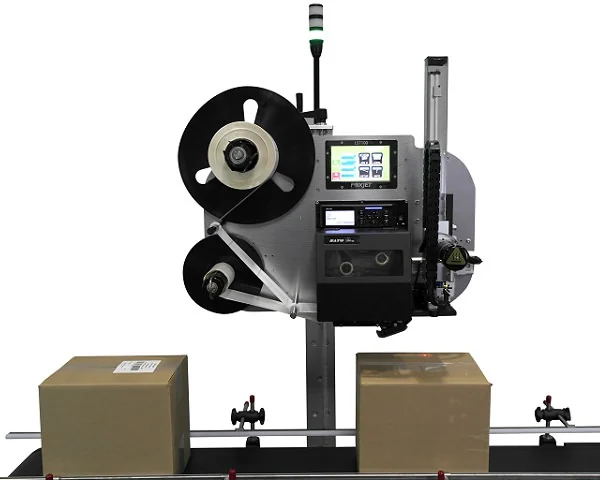
Print and apply machines combine label printing with automatic application. They are used when variable data, barcodes, address labels, weight labels, case IDs or pallet labels must be created at the time of production.
Use these machines as a shortlist starting point, then send sample details for a project-specific quotation.
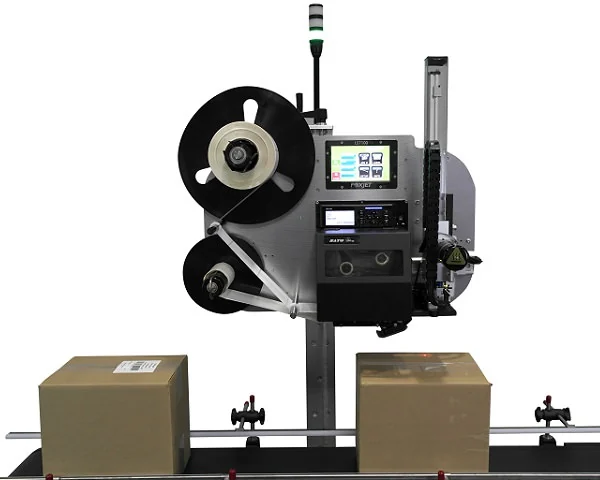
Print variable information and apply labels to products, cartons or cases.
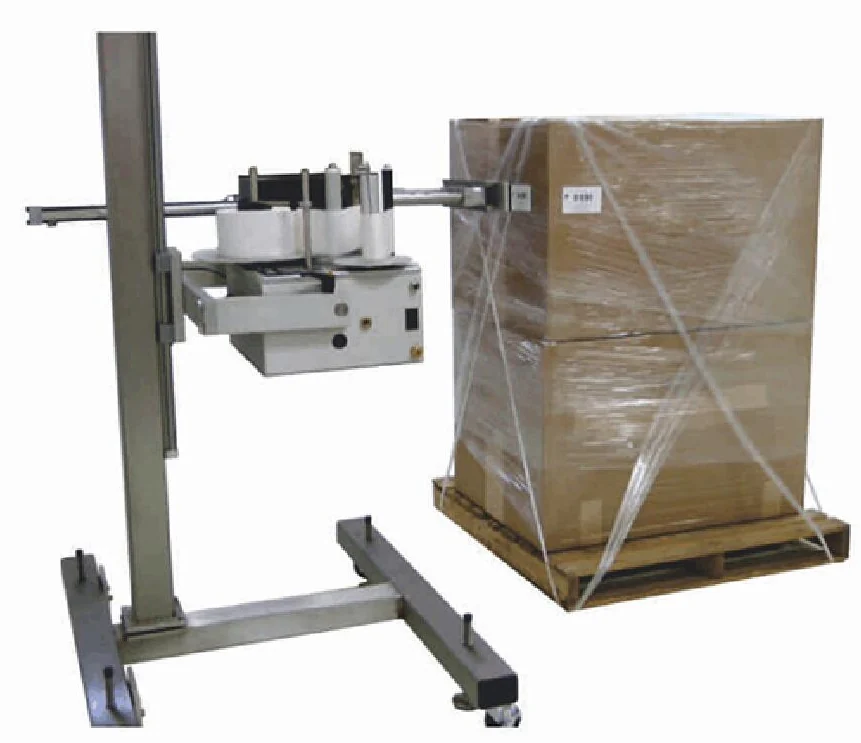
Print and apply pallet labels to one, two or multiple sides of palletised loads.
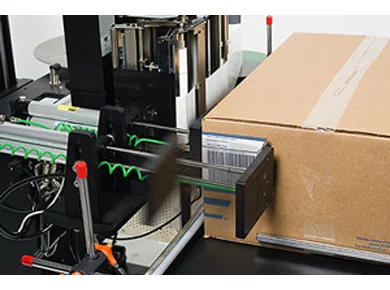
Weigh, print and apply labels for food packs and variable-weight products.
Print & Apply Labelling Machines should be selected around product handling, label roll data, required label position and the real production speed needed after changeover. A good specification should also confirm operator access, cleaning, guarding, conveyors, coding and spare parts before the machine is ordered.
Send your container, label and production details and Lancing UK can advise which machine range is the best fit.
A print-and-apply project is not only a printer mounted beside a conveyor. The label format, data source, print quality, product trigger, applicator movement and confirmation signal must work together at the available line rate and within the physical space around the pack.
Define which system supplies product, batch, address, barcode or logistics data and what should happen if data is missing or a communication link is unavailable.
Provide label dimensions, core, roll diameter, adhesive, ribbon requirement where applicable and the expected print density. The label must be suitable for the surface and storage environment.
The pack position and available face determine whether the label is wiped, tamped or otherwise transferred. The method should be selected around product movement and the required placement, not by printer model alone.
Decide whether the requirement is label-present confirmation, barcode reading, print-quality verification or a higher-level data reconciliation. These are different checks and should be described separately.
A plain label applicator is more appropriate when every label is already printed and no variable data is needed. A dedicated pallet system is preferable when the applicator must reach more than one pallet face or operate within a guarded end-of-line cell.
Include product dimensions, production label rolls, normal output, changeover range, line layout and the required label position. Lancing UK can then check whether this range is the correct commercial route.
Print-and-apply performance depends on four linked stages. The system must receive the correct job, produce a readable label, apply it to the intended pack and confirm the required outcome.
Map each field, source, template and transaction identifier.
Define media, ribbon where used, print quality and the response to printer faults.
Choose wipe, tamp, blow or another mechanism from product movement, surface and contact constraints.
State whether presence, reading, data comparison or barcode grading is required and what happens after failure.
Send the product, label and line information so the most suitable labelling route can be checked before quotation.