Mounting and adjustment
Provide the conveyor frame, available space, label position and the adjustment needed for all products. The stand or bracket should remain rigid at the intended reach.
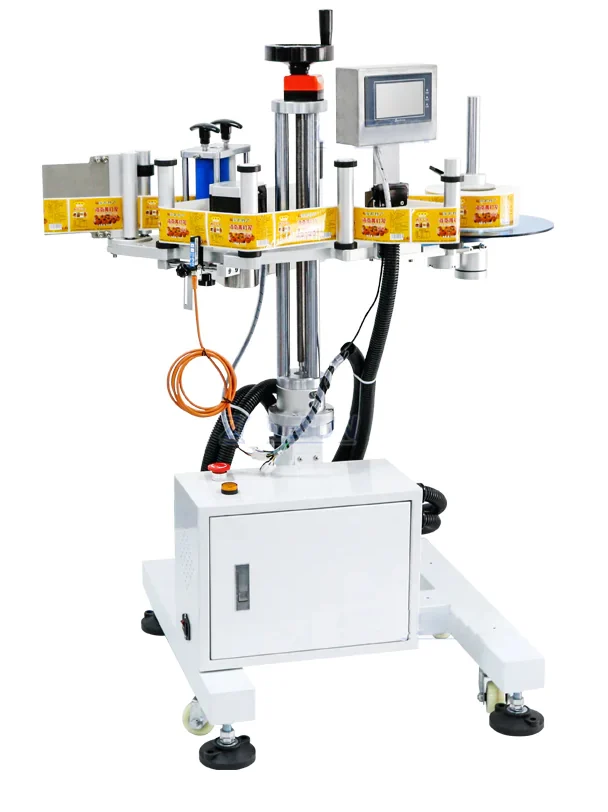
Label applicator heads are useful when the conveyor and product handling already exist. The head, stand and triggering arrangement are matched to the product path and label position.
Use these machines as a shortlist starting point, then send sample details for a project-specific quotation.
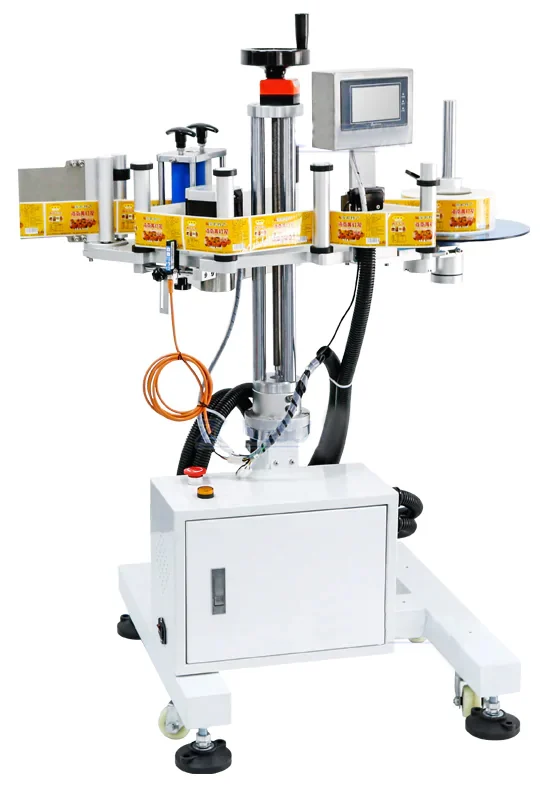
Side label applicator for bottles, boxes, cartons and line integration.
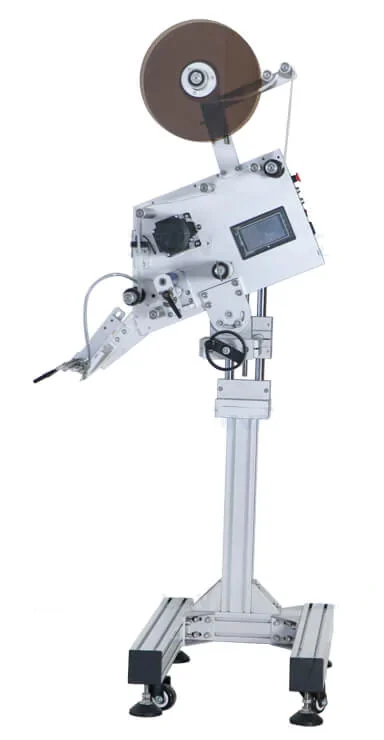
Top label applicator head for pouches, boxes, cards and flat product lines.
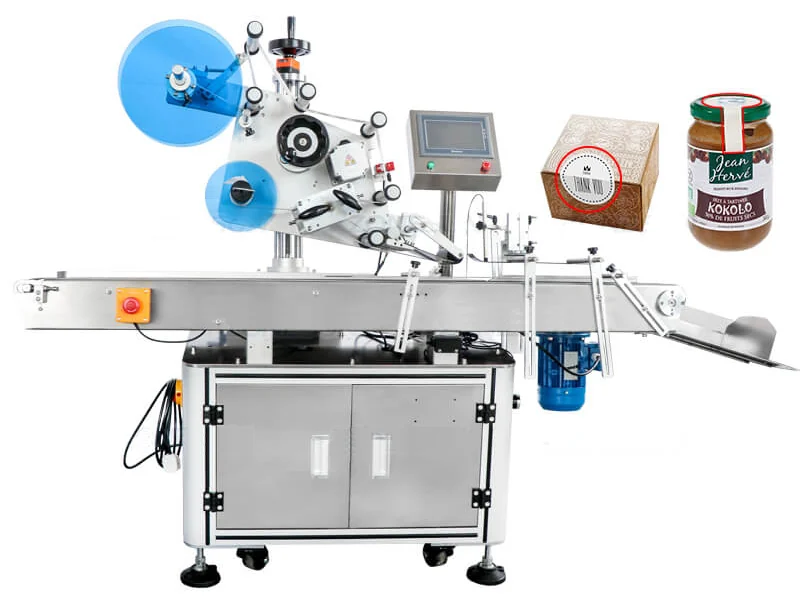
Tamper-evident label application for caps, lids, cartons and closures.
Label Applicators & Retrofit Heads should be selected around product handling, label roll data, required label position and the real production speed needed after changeover. A good specification should also confirm operator access, cleaning, guarding, conveyors, coding and spare parts before the machine is ordered.
Send your container, label and production details and Lancing UK can advise which machine range is the best fit.
A retrofit applicator can be a practical way to add top or side labelling, but the surrounding equipment must present each product at a repeatable position and speed. Mounting stiffness, adjustment range, product triggering and access to change the roll are part of the installation, not optional details.
Provide the conveyor frame, available space, label position and the adjustment needed for all products. The stand or bracket should remain rigid at the intended reach.
A product sensor needs a clear and repeatable target. Transparent, reflective, dark or irregular packs may require the sensing position to be tested rather than assumed.
The label feed and product surface speed must be coordinated for wipe-on application. Acceleration, stop-start movement and variable conveyor speed should be included in the controls discussion.
Allow space for roll loading, threading, cleaning the peel plate and adjusting the head without creating an unsafe reach across a running conveyor.
Choose a complete labelling machine where the existing line cannot control product spacing or orientation. Choose print and apply when the applicator must also create variable information for each product or batch.
Include product dimensions, production label rolls, normal output, changeover range, line layout and the required label position. Lancing UK can then check whether this range is the correct commercial route.
A label head needs a stable mount, controlled web path, product trigger, label-gap detection and a line response when it is not ready. Retrofit projects must also prove the existing conveyor can present the product accurately.
Record application side, height range, adjustment, vibration and access for roll loading.
Use a sensor and position that detects every relevant product without seeing gaps, handles or transparent sections incorrectly.
Agree enable, ready, fault, label end, product trigger and any print or inspection signals.
Include label threading, cleaning and maintenance in the guarding and isolation review.
Send the product, label and line information so the most suitable labelling route can be checked before quotation.
A standalone self-adhesive label head can suit a stable product already travelling on a controlled conveyor. A complete labelling machine is needed when spacing, orientation, stabilisation, guarding or the final wipe-down must be engineered around the product.
| Project condition | Likely scope | Evidence to provide |
|---|---|---|
| Stable flat product on an existing conveyor | Applicator head, stand, sensor and wipe device may be sufficient | Conveyor speed, height, direction, product pitch and application face |
| Round product needing wrap-around application | Product rotation and wrap control are normally required | Diameter range, filled weight, label length and seam criteria |
| Oval or shaped product | Orientation, side control or dedicated handling may be required | Geometry, reference feature and front/back relationship |
| Variable-data label | Print engine, data, application and verification must be specified together | Fields, source system, barcode requirement and failure response |
Use the self-adhesive labelling machine guide to identify the application route, then send a short line video and representative samples so the handling boundary can be confirmed.