Using an empty pack for every trial
Fill weight can change stability, side-belt pressure and conveyor behaviour. Use the normal production condition where it materially affects handling.
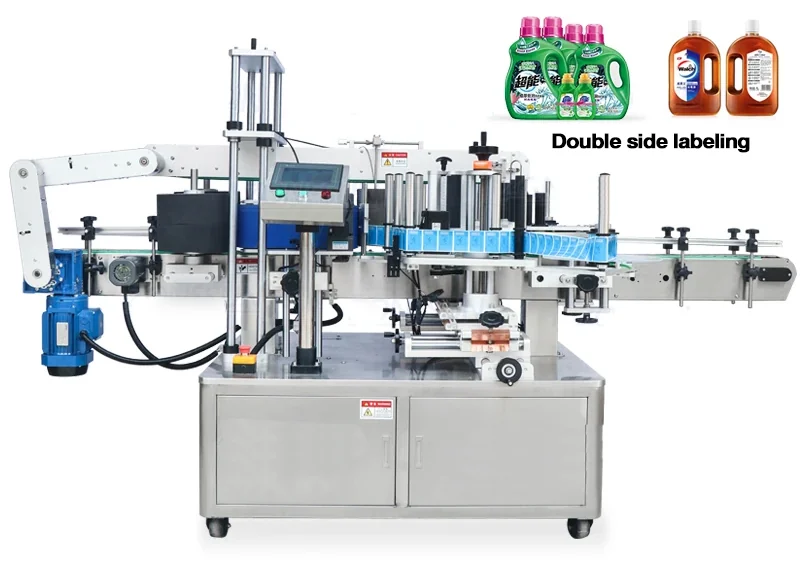
Container shape is the first decision. A round bottle usually needs wrap-around control, a flat bottle may need front and back label heads, a pouch may need a feeder and a top labeller, and a pallet may need a print and apply system. Choosing from the product image alone is the fastest way to buy the wrong machine.
Measure where the label starts, where it finishes and how much tolerance is acceptable. Front labels, back labels, wrap labels, tamper labels and top labels all require different product control.
A machine that can run quickly on one product may still be unsuitable for a multi-SKU environment if changeover is slow. List the smallest and largest product, label size range and expected changeover frequency.
Check infeed height, outfeed direction, conveyor speed, coding equipment, inspection points, rejects, guarding and operator access before the machine is ordered.
Send product and label details to Lancing UK and the most suitable labelling route can be checked before quotation.
Use the same evidence for every supplier and machine route. This makes quotations easier to compare and exposes where a recommendation depends on an untested assumption.
| Decision | Evidence to provide | What the review should establish |
|---|---|---|
| Application method | Pack shape, label position, marked samples and label artwork | Wrap-around, front/back, top, side, top/bottom, shaped-container, print-and-apply or sleeve route |
| Automation level | Normal output, batch size, operator availability, changeover frequency and growth requirement | Operator-loaded, compact automatic or integrated inline production |
| Product handling | Smallest and largest dimensions, material, filled weight, stability, taper and surface features | Feeding, spacing, orientation, side control, wrap control and transfer requirements |
| Label handling | Production rolls, dimensions, gap, liner, core, outside diameter, unwind, material and adhesive | Unwind capacity, peel path, sensor route, wipe-down and suitability for transparent or difficult labels |
| Line integration | Layout, conveyor height and direction, connected machines, controls, utilities and access | Mechanical interfaces, signals, accumulation, guarding and commissioning scope |
| Acceptance | Formats, sample quantity, placement references, output condition and expected fault responses | A repeatable FAT/SAT test rather than a single prepared demonstration |
Most avoidable issues begin before the machine is ordered. Capture these points while the project can still change without disruption.
Fill weight can change stability, side-belt pressure and conveyor behaviour. Use the normal production condition where it materially affects handling.
Artwork does not show liner, gap, stiffness, adhesive, unwind direction or how a transparent label is detected. Provide representative production stock.
Normal output, changeovers, roll changes, operator actions and downstream stops determine useful production capacity. Define the real operating pattern.
Mark the required position on the pack and define how skew, wrap seam or front/back alignment will be judged. A visual preference should be converted into a repeatable check.
Product spacing, conveyor height, accumulation, coding, inspection and guarding can decide whether the labeller runs reliably even when the label head itself is suitable.
Include the smallest and largest agreed formats and require a normal changeover. This tests whether settings and change parts are practical, not only whether one prepared format can run.
Use this site for high-level machinery selection. Continue to the specialist bottle, wrap-around, front-and-back, print-and-apply or sleeve site when the project has narrowed to that technology. This prevents duplicate specifications and keeps the enquiry attached to the correct commercial route.
Start with the product shape and label position. Round packs often point to wrap-around; flat or oval packs to front/back; flat products to top or side application; variable-data work to print and apply.
Provide the smallest and largest products in production condition, normal label rolls, marked placement examples, output and changeover requirements, and a layout of connected equipment.
Ask what product, label, operator actions and line conditions support the stated output. Compare normal operating performance rather than an unsupported headline maximum.
Before the sensor route is confirmed. Use the real label and liner because transparent materials, gaps and backing construction can affect detection.
Include agreed formats, label rolls, placement references, normal output condition, a representative changeover, interfaces and the response to agreed fault states.
List credible future dimensions, labels and output needs during specification. Do not assume a wider range without checking guides, label-head movement, sensors and change parts.
Two quotations can use similar machinery terms while covering different products, labels, interfaces and acceptance conditions. A fair comparison identifies what has been demonstrated, what is assumed and what remains to be confirmed before order.
| Decision area | Question for the quotation | Evidence to attach | Risk if omitted |
|---|---|---|---|
| Pack range | Which exact formats are included and which handling extremes were reviewed? | Dimensioned sample list, filled condition and photographs | The easiest sample is treated as representative of the whole range |
| Label construction | Which roll, liner, gap, material, transparency and unwind direction support the proposal? | Production rolls or verified roll specification | The sensor or unwind route is selected from artwork alone |
| Output basis | What product, label, spacing, operator action and downstream condition apply? | Normal operating pattern and connected-line description | A headline maximum is mistaken for usable line performance |
| Changeover | What must be adjusted or changed between the agreed format families? | Format matrix and representative changeover test | Frequent set-up work is discovered after delivery |
| Integration | Who supplies conveyors, controls, coding, inspection, guarding and interface signals? | Layout, interface schedule and responsibility list | Machines are individually suitable but do not operate as one line |
| Acceptance | How will placement, skew, print, label presence, restart and agreed output be checked? | Approved test plan and reference samples | Completion depends on subjective visual judgement |
| Support | What installation, training, documentation, spares and aftercare are included? | Scope of supply and support contacts | Operational ownership is unclear after handover |
Mark every requirement as confirmed from evidence, subject to a sample test or outside the proposed scope. This is especially important for transparent labels, tapered or unstable containers, orientation to a seam or handle, variable data, barcode checks and retrofits to existing conveyors. An assumption can be reasonable at budget stage, but it should be visible and resolved before the final acceptance criteria are agreed.
Use the product range to identify the likely machine family, the label-roll and container checklist to collect evidence, the troubleshooting guide to recognise common risks, and the service and support page to define the handover route.
Send the product range, labels, target operating pattern, line layout and proposed acceptance checks so Lancing can review the correct machine route.
A machine shortlist becomes defensible when the project passes four gates: application evidence, site/integration definition, acceptance proof and handover readiness.
| 1. Application evidence | Representative products, label rolls, placement references and normal SKU mix. |
|---|---|
| 2. Site and integration | Layout, conveyors, utilities, controls, guarding boundary, coding and inspection. |
| 3. Acceptance proof | Traceable requirements, FAT/SAT tests, changeover and fault/restart evidence. |
| 4. Handover readiness | Manuals, settings, backups, spares, training and open-action closure. |
Use the guide to prepare evidence for this part of the project.
Next guideUse the guide to prepare evidence for this part of the project.
Next guideUse the guide to prepare evidence for this part of the project.
Next guideUse the guide to prepare evidence for this part of the project.
Send the product, label and line information so the most suitable labelling route can be checked before quotation.
These questions turn a broad machinery quotation into a comparison of scope, evidence, responsibility and acceptance.
A format envelope is the verified range of products and labels that the machine is expected to handle, together with the limits and changeover method. It is more useful than listing only the smallest and largest dimensions because two products inside those dimensions can behave very differently.
Include shape, stability, filled condition, label position and any format-specific parts or settings.
Yes. Acceptance criteria should be agreed while the scope and machine responsibility are still being defined. They should state the samples, labels, operating condition, observable result and any exclusions or site-dependent work.
Writing the criteria before order reduces the risk of buyer and supplier using different definitions of a successful test.
Use the smallest set that represents the genuine handling risks, not simply every SKU or only one convenient sample. Include the extremes and any product that differs in taper, rigidity, panel, label material, stability or closure feature.
A documented rationale for the selected samples makes it clear which untested variants still need confirmation.
Compare sample-test results, layout and handling concept, stated format range, included utilities and controls, changeover method, acceptance plan, documentation, training, warranty wording and service responsibility. Also compare assumptions and exclusions.
A detailed machine description is not a substitute for evidence that the proposed handling route suits the actual pack.
The handover set should match the supplied machine and normally include operating and maintenance information, drawings, parts information, approved settings or recipes, test records, training evidence and the final interface or safety documentation that forms part of the agreed scope.
Confirm the required format, language and backup arrangements in the order rather than after delivery.
Send the product, label and line details to Lancing so the answer can be checked against the real pack rather than treated as a generic machine assumption.
Three projects can use the same label roll yet need very different scopes: a dispenser for manual application, a semi-automatic machine for repeatable batches or a qualified automatic line with controlled records and acceptance evidence.
| Buyer question | Why it changes the quote | Detailed guide |
|---|---|---|
| Is self-adhesive the correct label technology and application route? | Wrap-around, front/back, top/side, shaped-container and print-and-apply systems handle the product differently. | Self-adhesive labelling machines |
| Does the operator only need labels presented, or must the machine control placement? | A dispenser, semi-automatic fixture and automatic conveyor system have different labour, handling and repeatability. | Dispenser vs labelling machine |
| Does the site require IQ, OQ, PQ or electronic-record controls? | Documentation, traceability, test protocols, software scope and witnessing must be allowed for before design is frozen. | IQ, OQ and PQ planning |
State these decisions in the initial brief. They affect the equipment boundary, acceptance plan and commercial scope even when the visible label application appears similar.
A labelling machine needs to know when a label is ready to dispense and when a product is in the application position. These are separate sensing tasks. A sensor that detects transparent labels on their liner does not automatically solve detection of a clear bottle moving on the conveyor.
Give the supplier both sample sets: the final printed label roll and every relevant product presentation. Ask which sensor detects the label gap, which detects the product and what triggers the application cycle. Include reflective decoration, very clear material, narrow gaps and changing bottle fill levels where these are part of normal production. Specialist optical or ultrasonic label sensors may be appropriate, but the selection depends on the actual label construction.
During a trial, distinguish a missed label from a missed product trigger. Record whether the label advances correctly when no product is present, whether every approved product is detected, and what happens after a stop or roll change. Agree a response to uncertain detection. This makes sensor requirements comparable across quotations and directs troubleshooting to the relevant part of the application sequence.
Not automatically. Label-gap detection and product detection are separate duties, each requiring the correct sensor and sample test.
Supply production label rolls and all relevant containers in their normal filled or empty state, including clear, reflective and low-contrast variants.
Review transparent label detection Compare product and label sensing