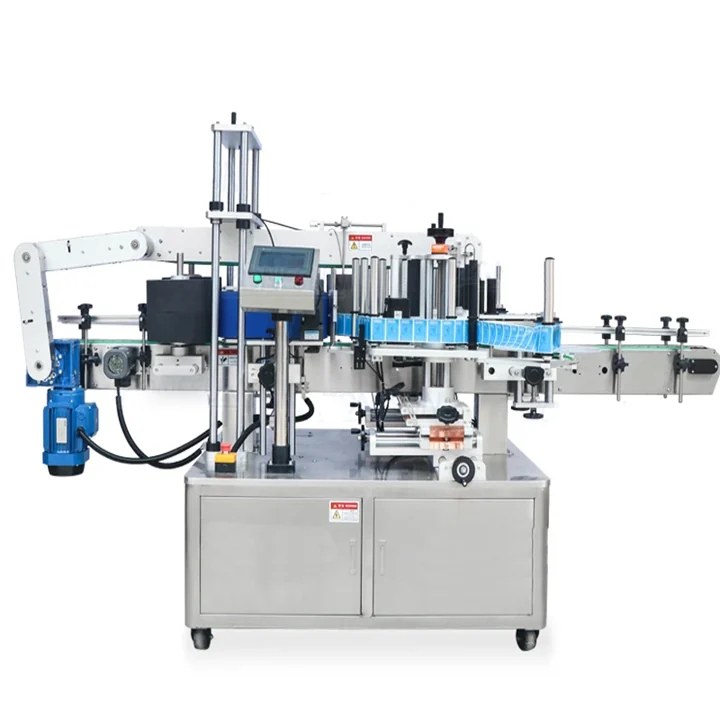
How do you set label-placement acceptance criteria?
Set label-placement acceptance criteria by defining a stable product datum, the required label position, the permitted variation, the sample range and the operating conditions under which the result will be judged.
The short answer
A placement requirement needs a reference, a measurement and a test condition. “Label centred” is not enough unless the centre is defined and the pack itself is consistent. Record the edge, panel, seam or feature used as the datum, then state how label position and appearance will be checked on representative production-condition samples.
Choose a repeatable product datum
A datum is the feature from which the label position is measured. Suitable examples can include the product base, a flat panel edge, a moulded reference, a controlled orientation feature or an existing print mark. The datum must be visible or measurable after labelling and must be presented repeatably by the handling system.
If the product varies dimensionally, separate product variation from machine placement variation. Otherwise the acceptance result can blame the labeller for a changing container feature.
Write criteria that can be observed
- State the intended label position relative to the chosen datum.
- Define acceptable skew, wrinkle, bubble, lifting, fold or seam appearance where relevant.
- For front and back labels, define the relationship between both labels as well as each individual position.
- For coding or print and apply, check print content and applied position as separate requirements.
- Define how missing, doubled or rejected labels are detected and handled.
- Record the sample set, label rolls, rate, changeover and environmental condition used for the test.
How acceptance differs by labelling route
| Application | Useful datum or evidence | Additional check |
|---|---|---|
| Wrap-around bottle | Base, seam, mould feature or controlled orientation point | Meeting seam, overlap or gap and label skew around circumference |
| Front and back | Stable base and panel edges | Front-to-back relationship and container twist |
| Top or bottom | Leading and side product edges | Transfer stability, underside support and label flatness |
| Print and apply | Product identity and application face | Data correctness, readability, label presence and queue recovery |
| Pallet | Defined pallet face and height reference | Wrap condition, adjacent-face position and scan confirmation |
Test the agreed operating condition
Use the smallest, largest and most difficult representative formats, not only the easiest product. Run production labels and realistic product spacing. Include a normal roll change and product changeover, then repeat the placement check after the machine has been stopped and restarted.
Where the line will operate at several rates, agree which conditions are acceptance points. A test at a convenient demonstration rate does not automatically prove the same result under every upstream or downstream condition.
Common buyer questions
Is visual approval enough?
Visual approval is useful for appearance, but it should be tied to an approved sample or clearly described defect limits. A purely informal judgement is difficult to repeat after a changeover or at site acceptance.
Should a placement tolerance always be equal in both directions?
Not necessarily. The label may have a critical edge, legal panel or seam relationship that makes one direction more important. Define the permitted zone around the real product feature rather than applying a generic symmetric number.
How many samples should be checked?
The number should be sufficient to show repeatability across the agreed operating period and product range. The project should define the sample method rather than relying on one attractive example from the beginning of a run.
How do clear labels affect inspection?
A clear label can be difficult to see against a transparent or glossy pack. The inspection method may need to use an edge, print feature, registration mark or other observable evidence. Prove the method with the final artwork and container.
What to put in the acceptance record
- Product and label identification, including roll batch where relevant.
- Machine recipe, change parts and key set-up references.
- Operating rate and upstream/downstream condition.
- Defined datum and measurement or visual assessment method.
- Results before and after changeover and restart.
- Fault, missing-label, reject or verification checks included in scope.
- Photographs or signed samples retained as references.
- Open actions and site-dependent tests not completed at FAT.
Continue the labelling-machine decision
Use the page that matches the next technical or buying question, then send the confirmed information with your enquiry.
Labelling-machine FAT checklist
Convert the criteria into a controlled factory test.
SamplesTrial sample selection
Choose products that represent the actual handling risk.
SpecificationUser requirement specification
Write the requirement before comparing machine proposals.
MachinesLabelling machine ranges
Apply the acceptance method to the correct machine route.
Ask Lancing to review the real product and label
Share photographs, dimensions, production-condition samples, label-roll details and the intended line arrangement so the guidance can be checked for the actual application.