Pack support
Provide the minimum product length and the location of any flexible areas, feet, recesses or seals. The product must remain supported while the underside is exposed to the lower label head.
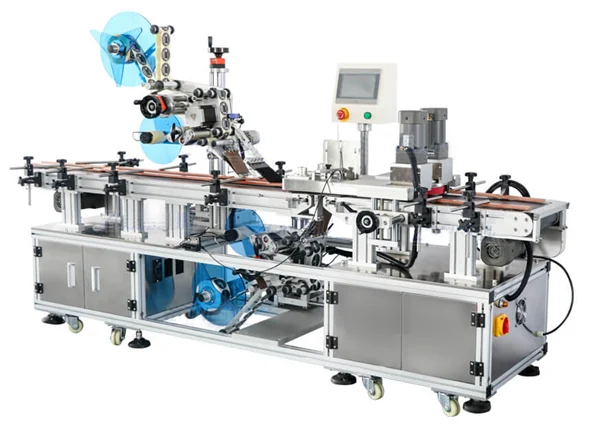
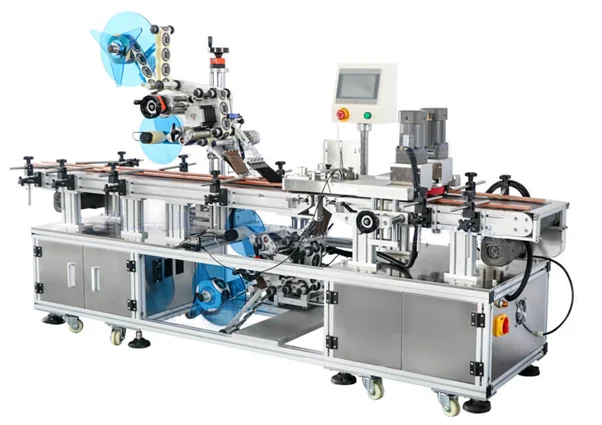
Top and bottom labellers apply labels to two faces of a product, often using a split conveyor to expose the underside. Stability, product length and label placement tolerance are important specification checks.
Use these machines as a shortlist starting point, then send sample details for a project-specific quotation.
Top & Bottom Labelling Machines should be selected around product handling, label roll data, required label position and the real production speed needed after changeover. A good specification should also confirm operator access, cleaning, guarding, conveyors, coding and spare parts before the machine is ordered.
Send your container, label and production details and Lancing UK can advise which machine range is the best fit.
Applying a label to the underside normally requires the product to bridge a controlled gap or pass through a split-conveyor arrangement. Product length, rigidity, thickness, centre of gravity and the location of the bottom label all influence whether the pack remains stable during transfer.
Provide the minimum product length and the location of any flexible areas, feet, recesses or seals. The product must remain supported while the underside is exposed to the lower label head.
Confirm whether both labels are the same size and material, and provide the unwind direction for each roll. Separate sensors and label-head settings must be checked for both faces.
State the incoming conveyor height, product spacing and downstream equipment. Transfer points should be assessed with the actual pack, particularly where products are light or have a high centre of gravity.
Run the smallest and largest formats and inspect both faces after normal setup. Record top-to-bottom registration only when the product design requires a relationship between the two labels.
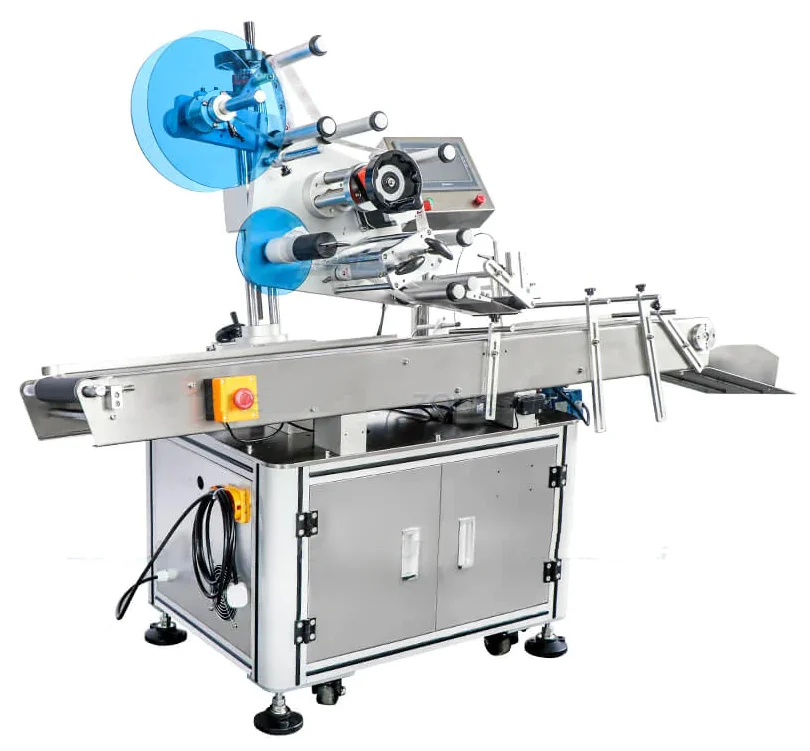
A single top applicator is more appropriate when only the upper face needs a label. Side labelling may be simpler for upright cartons, while print and apply is preferred when the label content is generated at the point of application.
Include product dimensions, production label rolls, normal output, changeover range, line layout and the required label position. Lancing UK can then check whether this range is the correct commercial route.
A bottom label head needs a controlled opening or split in the product support while the pack remains stable. Product length, rigidity, centre of gravity and conveyor transfer geometry determine whether the underside is exposed safely and repeatably.
Check that the minimum product bridges the opening without tipping, snagging or changing speed.
A top label can use the leading edge or another datum; agree how its position relates to the bottom label.
Inspect moulding, seams, recesses and contamination on the actual bottom surface.
Test minimum and maximum products through stop, restart and downstream transfer, not only one continuous run.
Send the product, label and line information so the most suitable labelling route can be checked before quotation.