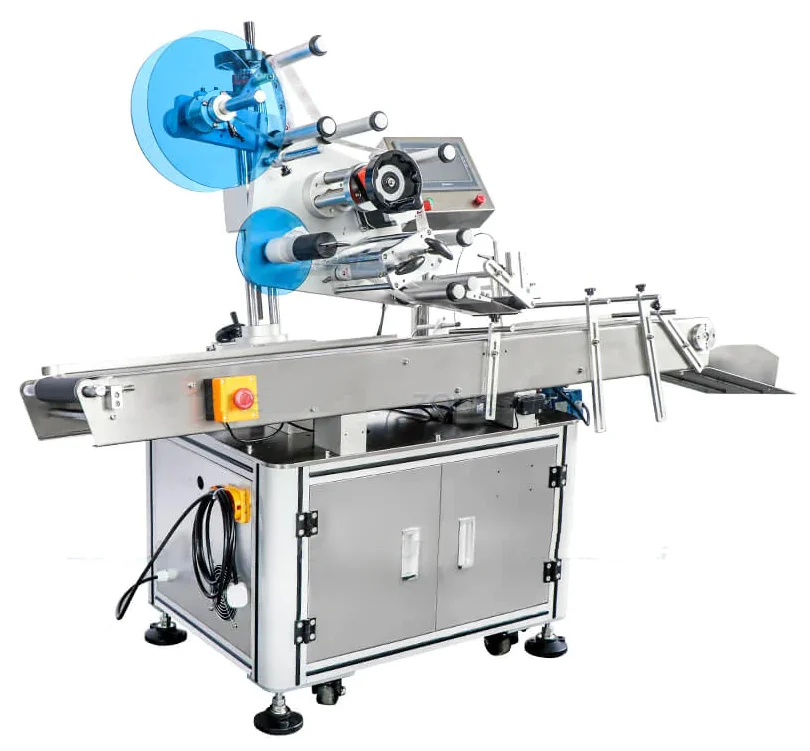
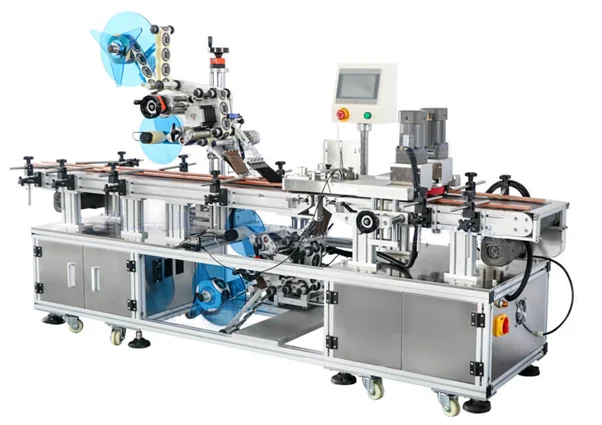
Automatic Top & Bottom Labelling Machine
Home/Products/Top & Bottom Labelling Machines/Automatic Top & Bottom Labelling Machine

Automatic Top & Bottom Labelling Machine

Automatic top and bottom label application for production conveyors.

Automatic top/bottom range

Application overview

A conveyorised automatic system for applying labels to the top and bottom of products with consistent spacing and wipe-down control.

  • Automatic conveyorised product handling
  • Top and bottom label heads
  • Wipe-down and presentation options
  • Can be specified for cartons, trays, cards and sleeved packs
Automatic Top & Bottom Labelling Machine
Specification

Typical specification starting points

Final specification depends on real samples, label material and the production environment.

Typical useAutomatic top/bottom labelling
Automation levelAutomatic
Container typeFlat products and cartons
Line roleInline labeller
Machine video

See the labelling format in motion

This video asset is included in the site package so the page can show buyers the labelling action without relying on external embeds.

Specification points for this labelling range

Automatic Top & Bottom Labelling Machine should be selected around product handling, label roll data, required label position and the real production speed needed after changeover. A good specification should also confirm operator access, cleaning, guarding, conveyors, coding and spare parts before the machine is ordered.

  • Confirm product dimensions, material, weight and stability.
  • Check label roll core, outside diameter, label gap and unwind direction.
  • Agree acceptable placement tolerance and repeatability.
  • Plan integration with filling, capping, coding, inspection or end-of-line handling where required.

Enquire about the Automatic Top & Bottom Labelling Machine

Send your sample details, label roll specification and required output. Lancing UK can advise whether this configuration is suitable or whether another labelling route would be better.

Engineering detail

Design the product transfer before positioning the upper and lower labels

Top-and-bottom labelling is used where both faces of a carton, tray, card, sleeve or other flat product need labels in one production pass. The lower label head normally needs access through a controlled conveyor transfer. Product length, rigidity, thickness and centre of gravity therefore determine whether the pack can bridge the opening without tipping, flexing or changing position.

How the application process works

The product is detected and transported across the application area while the upper and lower label heads dispense at defined positions. The top label can be applied against a supported conveyor surface, while the bottom application depends on the transfer geometry and support before and after the peel point. Both heads need independent label-roll setup, sensing and timing, but the product path must keep the pack in the same lateral position for both faces.

When another technology is more suitable

Use a single top or side applicator when only one face needs a label. A print-and-apply system may be more suitable where the label content is generated at the point of application, and front/back equipment may be preferable for upright bottles rather than flat packs.

Project evidence to send

  • Representative smallest and largest products in production condition
  • Normal label rolls with roll and unwind details
  • Marked examples showing the required label position
  • Normal output, batch pattern and changeover range
  • Line layout, conveyor interfaces, coding and inspection requirements
Specification and test

Inputs that determine handling, sensing and acceptance

Unknown values should be confirmed from the real product and label rather than replaced with catalogue assumptions.

Product supportMinimum and maximum length, width and thickness, rigidity, filled weight, centre of gravity, feet, recesses, seals and any flexible region that cannot bridge a conveyor gap.
Upper and lower labelsDimensions, materials, gaps, cores, outside roll diameters and unwind direction for both rolls, including whether their positions must align through the pack.
Placement referencesLeading edge, side datum and allowed label area on each face. Supply marked samples or artwork where labels must avoid windows, seams or printed information.
Line conditionsProduct spacing, incoming and outgoing conveyor details, normal rate, stop-start behaviour, coding or inspection equipment, guarding and access below the conveyor.
Sample trial

Use production-condition evidence

Test the shortest, longest, lightest and most flexible agreed products, not only the most stable format. Check that each pack crosses the lower-head transfer without pitching or changing its side datum. Inspect top and bottom placement separately, then confirm any required relationship between the two labels. Repeat after a changeover and after several stops and starts if that reflects normal production.

Changeover and upkeep

Protect repeatability after setup

Clean peel edges, rollers, belts and sensors on both label paths. Inspect conveyor transfers for debris, wear and changes in belt tracking. Because the lower head is less visible, include it in routine roll-threading and adhesive-build-up checks rather than adjusting timing from the top of the machine only. Record upper and lower settings separately for each SKU.

Quotation brief

Describe the complete line role

Include upstream and downstream equipment, conveyor direction and height, normal stops, operator access, utilities and any control signals. State which items are essential and which are future options.

Buyer questions

Questions to resolve before ordering

Which products suit top-and-bottom labelling?

Flat, sufficiently rigid products such as cartons, trays, cards and sleeved packs are typical. The product must remain controlled while the underside is exposed to the lower label head.

Why is minimum product length important?

The pack may need to bridge a conveyor transfer used to access the underside. A product that is too short or flexible can tip, sag or lose its reference position.

Do the top and bottom labels need to align?

Only if the pack design requires it. Define separate references for both faces and state any relationship that must be maintained between the two labels.

Can clear labels be used?

Clear labels may require suitable sensing and should be tested with the actual label and liner on each head.

What samples should be provided?

Send the extremes of the product range, normal production label rolls, marked placement examples and details of the incoming and outgoing conveyor arrangement.

When is a single top applicator enough?

Use a single top applicator when only the upper face needs a label and the product can be presented consistently without a lower-head conveyor transfer.

Ask Lancing UK to review this application

Send product samples or dimensions, the label-roll specification, marked placement examples, normal output and the surrounding line details.

Transfer control

Treat the transfer between upper and underside application as part of the labelling process

A top-and-bottom system must expose two product faces while keeping the pack on a repeatable path. Pack rigidity, thickness, leading edge and the support available during transfer can be more important than the nominal capability of either label head.

Pack flatness and rigidity

Flexible pouches, bowed cartons, trays with rims and products with an uneven underside can respond differently to guides and wipe-down pressure. Test the production condition, not an empty or specially selected sample.

Transfer and support

Confirm how the pack crosses the opening or split needed to reach the underside. The product must not dip, rotate or change speed in a way that moves the bottom label reference.

Two sensing paths

Top and underside labels can have different dimensions, gaps or materials. Provide both production rolls and define which product trigger controls each application event.

Test conditionTop-face checkUnderside check
Smallest and thinnest packTrigger point, wipe-down and label overhangSupport across transfer and repeatable leading edge
Largest or least rigid packGuide clearance and surface contactDeflection, tracking and clearance around the lower head
Representative sequencePosition after several products and after a short stopPosition after transfer and at normal product spacing
ChangeoverHead, guide and sensor settings restoredTransfer and lower-head settings restored
Fault recoveryKnown status of the upper label and productKnown status of the lower label before restart

What the supplied demonstration shows

The page clip shows the upper label head, product trigger area and conveyor presentation on the automatic labeller. It helps explain the upper application stage, but it does not show the complete underside transfer. The lower application path, pack support and final two-face result should therefore be confirmed separately during the project trial.

Use the top and bottom range for the full category, the flat-surface range for single-face applications, and the flat-product guide when deciding whether a second label head is required.

Confirm both product faces and the transfer condition

Send representative packs, both label rolls, marked top and underside positions, pack orientation and the required line interface.

Acceptance planning

Validate the underside transfer as well as both label heads

The smallest and most flexible products should remain supported as they cross the bottom-application opening. Test top and bottom label position, product speed through the transfer and behaviour when the line stops with a product in the labelling zone.

Test conditionWhat to prove
Minimum lengthBridges the split without tipping
Flexible packRemains flat enough for repeatable application
Bottom surfaceAdhesion across seams, recesses or contamination
Blocked outfeedControlled stop without trapped unknown product
Restart sampleBoth labels present and correctly related

Prepare a representative machine trial

Send the minimum, maximum and most difficult products with production-quality label rolls and the intended placement reference.

Buyer questions

Further questions about top-and-bottom labelling

Applying a label to the underside creates a transfer and support problem as well as a label-dispensing task.

How is the product supported while the underside label is applied?

The product must bridge or pass through a controlled transfer that exposes the underside without losing position. Belt layout, product length, stiffness, weight distribution and surface contact determine whether the pack remains stable across that gap.

The smallest and most flexible intended format should be included in the transfer trial.

Why can flexible packs move during top-and-bottom labelling?

Flexible packs can bow, flutter or change thickness as they transfer between conveyors. Air trapped in a pouch and uneven product distribution can also shift the surface presented to the label head.

Feed method, support, belt speed and pack condition should be assessed together rather than treating the pouch as a flat rigid object.

Can a security or tamper label be added in the same line?

A further applicator may be added when the product can be presented to the required closure or panel and the line has enough controlled space. The extra label introduces another roll, trigger, placement datum and missing-label condition that must be included in the controls and test plan.

Confirm whether the security label is part of the top, bottom or a separate side application.

How should top and bottom placement be referenced after transfer?

Measure both labels from stable product edges or printed features that remain visible after the product leaves the transfer. The reference should not depend on the temporary belt gap or a moving machine component.

Where relative alignment matters, define the permitted relationship between the two labels as well as the position of each label.

Need an answer for a specific labelling application?

Send the product, label and line details to Lancing so the answer can be checked against the real pack rather than treated as a generic machine assumption.

Next proof

Prove the product across the underside transfer

The smallest, lightest and most flexible product should be tested across the split or gap used for bottom application. The line layout must also retain product tracking for top/bottom inspection and reject handling.

Contact us