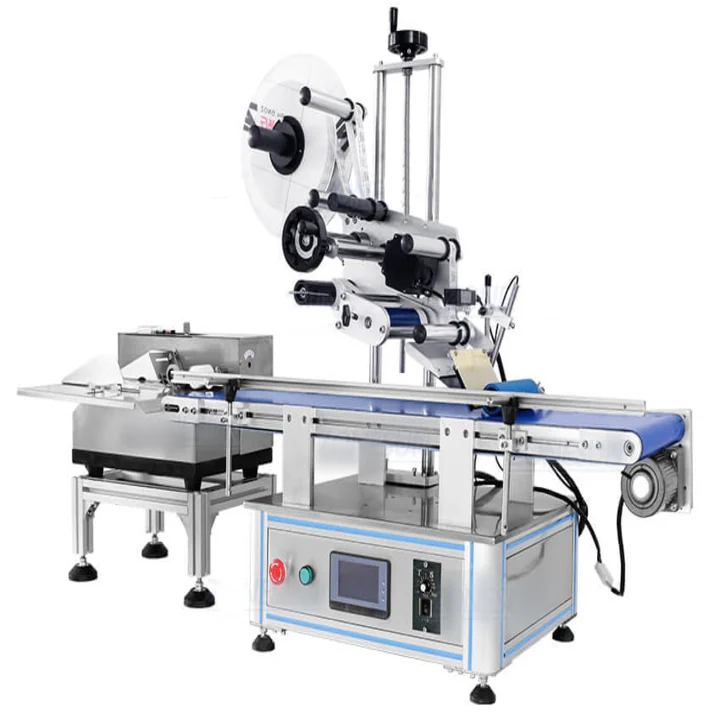
Container information
Provide width, height, diameter, material, fill level, cap or closure type, and photos from all sides. Include the smallest and largest SKU.
Label information
Provide label width, label length, roll outside diameter, core size, winding direction, gap size and label material. Clear labels should be identified early.
Production information
Provide target output, changeover frequency, operator involvement, available space, power, compressed air, conveyor height and any existing equipment that must connect to the labeller.
Need a machine recommendation?
Send product and label details to Lancing UK and the most suitable labelling route can be checked before quotation.
Record the pack and roll data before labels are ordered
The labeller, container and label roll form one mechanical system. A mismatch in core, unwind direction, liner width, label gap or product geometry can delay a trial even when the artwork is correct.
| Area | Record | Reason |
|---|---|---|
| Container | Material, shape, filled weight, base, smallest and largest dimensions | Guide contact, stability and machine route |
| Label panel | Position, reference edge, taper, seams, recesses and curvature | Placement and finished appearance |
| Label | Width, length, material, adhesive, transparency and die shape | Sensing, flexibility, wipe-down and adhesion |
| Liner | Web width, gap, thickness and condition | Tracking, peel and sensor performance |
| Roll | Core, outside diameter, inside/outside wind and artwork leading edge | Physical fit and correct presentation to the applicator |
| Line | Direction, height, normal output, pitch, coder and inspection | Integration and trigger timing |
Use production-quality samples
A small hand-made label roll may not reproduce production die-cutting, liner, curl or winding tension. Supply a production-quality roll where possible, together with labelled and unlabelled products. If the final adhesive is not yet selected, state that clearly so the trial result is not treated as final adhesion approval.
Confirm artwork orientation before the print run
Inside/outside wind and top, bottom, left or right edge leading determine how the artwork reaches the product. The machine direction and label-head side also matter. Send a roll photograph or winding diagram before the labels are committed.
Keep a controlled sample set
Retain the exact products and labels used during the approved trial or FAT. Record supplier and batch where practical. This creates a reference when a later production roll behaves differently.
Continue with the label core and roll specification guide, roll quality checklist and trial-samples guide.