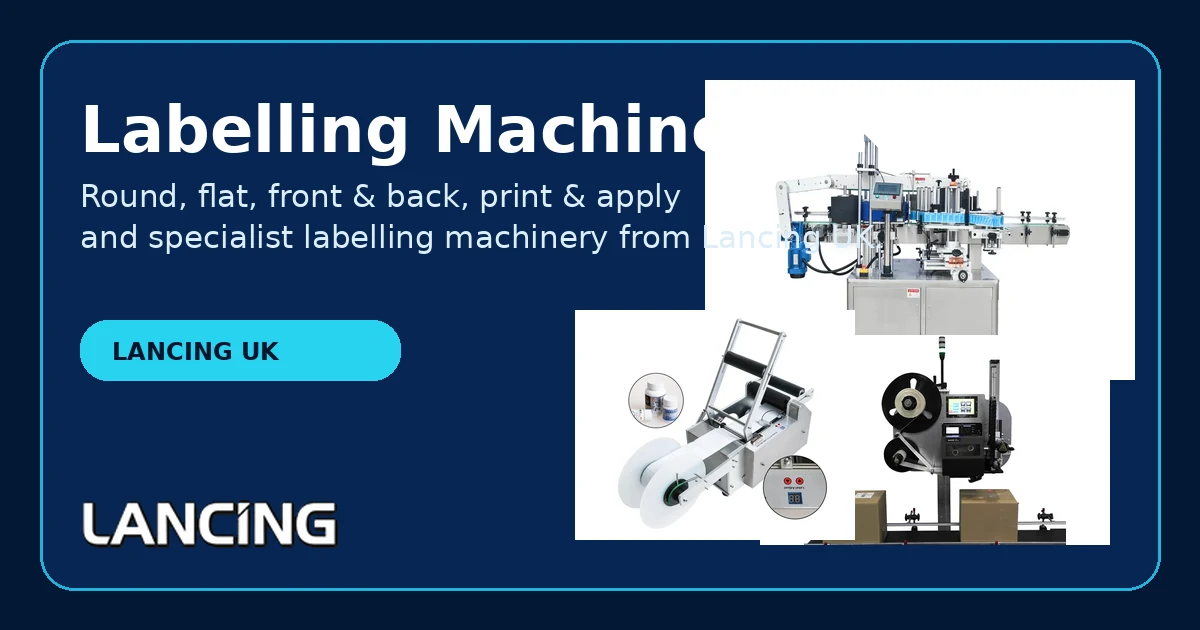
Labelling machine guarding and risk assessment
Guarding cannot be specified from a brochure image alone. The final arrangement depends on the moving parts, access frequency, product path, adjacent machinery and the way operators clear labels, products and faults. This guide helps buyers gather the evidence needed for a competent site-specific assessment.
Guarding cannot be specified from a brochure image alone. The final arrangement depends on the moving parts, access frequency, product path, adjacent machinery and the way operators clear labels, products and faults. This guide helps buyers gather the evidence needed for a competent site-specific assessment.
Define the complete machine scope
Treat the labeller, conveyor, product-spacing devices, top-hold belts, print engines, reject mechanisms and interfaces to adjacent machines as one operational system for assessment purposes. A safe stand-alone unit can become unsafe if an open conveyor transfer exposes a new nip point or if an operator must reach through a neighbouring machine to clear a label web.
Record who supplies each guard, interlock, emergency-stop device, isolator and fixed barrier. The drawing should show normal operator positions, changeover access, maintenance access and the product route. Any later modification to conveyors, applicators or guarding should trigger a review by a competent person.
Identify tasks as well as moving parts
Risk assessment should consider normal production, set-up, label-roll loading, product changeover, cleaning, fault finding, jam clearance, maintenance and foreseeable misuse. Labelling equipment can include rotating belts and rollers, in-running nips, powered applicator strokes, hot or moving printer parts, pneumatic energy and automatic restart following a signal from another machine.
Frequency and duration of access matter. A fixed guard may be suitable where access is rare and tools are used. Repeated access can require an interlocked guard or another protective measure designed for the actual task. The assessment must also consider visibility, reach routes, stored energy and whether stopping time is compatible with the proposed access control.
Use a hierarchy rather than relying on warnings
Where possible, remove the hazard by design or keep people physically separated from it. Fixed and interlocked guards, protective devices, safe control functions, suitable isolation and accessible emergency stops are then considered according to the assessed risk. Warning labels and procedures support safeguards but do not replace effective engineering controls where access to dangerous parts is possible.
Interlocks should be positioned and constructed so they are not easily defeated. Opening an interlocked guard should produce the intended safe response, and the machine should not restart merely because the guard is closed. Reset and restart arrangements must be visible, deliberate and appropriate for the area that can be accessed.
Design around real operator interventions
Poorly located guards often lead to unsafe workarounds. Before sign-off, ask operators to demonstrate label loading, threading, sensor cleaning, routine adjustment, product guide changeover and fault clearance. Confirm that these tasks can be completed without reaching past moving parts or bypassing protection.
Safe isolation must address all relevant energy sources and the site procedure. Pneumatic cylinders, gravity, spring force and retained electrical energy may remain after a normal stop. Maintenance instructions should identify where energy is isolated, how stored energy is controlled and how the machine is proved safe before work begins.
Record safety evidence at handover
The handover pack should identify the final guarded layout, safety devices, residual risks, required inspections, operator and maintenance instructions, and any site actions still open. Test emergency stops, guard interlocks and permitted restart behaviour in the installed configuration. Record results and close deviations before routine production.
The user remains responsible for selecting, installing, using and maintaining work equipment safely. Inspection intervals and maintenance arrangements should be determined from the machine instructions, use, environment and risk assessment.
Use current HSE guidance and competent advice
HSE explains that PUWER places duties on organisations that own, operate or control work equipment, including requirements for suitability, maintenance, inspection, training and suitable protective measures. HSE also describes safeguarding as including guards, interlocks and other protective devices.
This page is general project guidance, not a risk assessment or legal opinion. Use a competent machinery-safety professional for the actual installation and refer to current HSE information, including the PUWER overview and machinery-safety guidance linked below.
Authoritative UK guidance: review the HSE PUWER overview, HSE introduction to machinery safety and HSE Approved Code of Practice for safe use of work equipment. A competent assessment is required for the actual machine and site.
Evidence to agree before acceptance
Use the table as a project conversation starter. The final requirements and safe methods must be confirmed for the actual product, label, line and site.
| Area | Evidence to define | Acceptance focus |
|---|---|---|
| Label-roll change | Open label path and nearby rollers | Provide safe access, defined stop/isolation state and clear threading instructions |
| Product changeover | Guides, belts and applicators need adjustment | Use accessible settings and prevent unexpected movement during adjustment |
| Jam clearance | Product trapped at conveyor or wrap station | Define safe stop, isolation where required and restart checks |
| Printer maintenance | Printhead, ribbon or media path accessed | Follow printer instructions and control hot, sharp or moving parts |
| Guard opening | Access to a protected area | Verify safe response, deliberate reset and no unexpected restart |
| Cleaning | Sensors, belts and conveyor surfaces reached | Plan isolation, cleaning materials and reinspection before production |
Continue the project specification
Use the most relevant guide for the next decision, then send the confirmed information with your enquiry.
Site survey checklist
Capture access, layout, utilities, interfaces and site safety constraints.
ControlsControls and interlocks
Separate production handshakes from project-specific safety functions.
RecordsHandover documentation
Retain final drawings, instructions, test records and training evidence.
SupportLancing services
Discuss installation, commissioning, training, spares and support.
Review the labelling-line requirement with Lancing
Send the product, label, layout and operating information so the required machine, controls and project evidence can be defined before quotation.