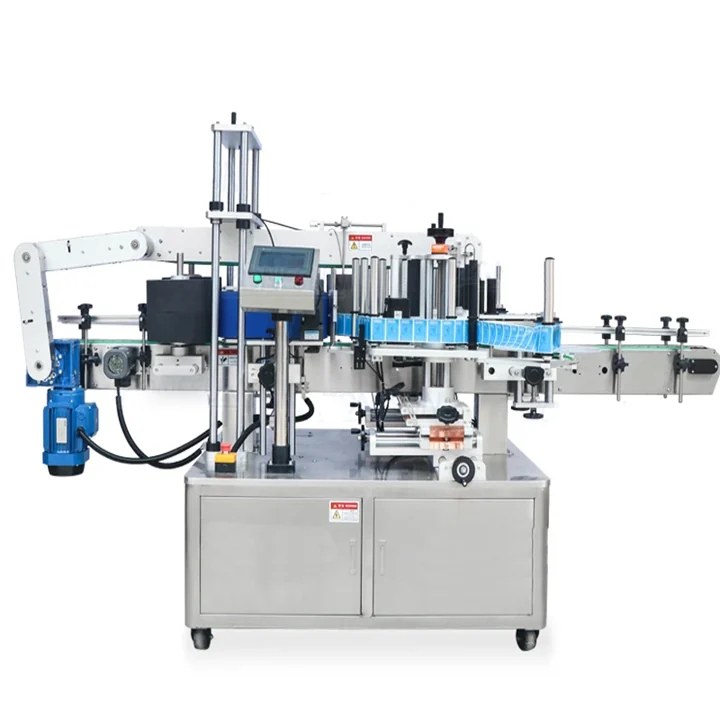
How to plan IQ, OQ and PQ for a labelling machine
A practical qualification-planning guide for pharmaceutical, medical and other regulated labelling projects, with clear boundaries between FAT, SAT, IQ, OQ and PQ.
What do IQ, OQ and PQ mean for a labelling machine?
Installation Qualification (IQ) documents that the labelling machine has been installed against an agreed specification. Operational Qualification (OQ) challenges the machine and its controls across defined operating conditions. Performance Qualification (PQ) demonstrates the process using representative products, labels, operators and production conditions. The exact scope belongs to the site quality system and must be agreed before the order is finalised.
IQ, OQ and PQ are not interchangeable with a factory acceptance test. FAT and SAT can provide evidence for qualification, but the regulated owner decides how that evidence is approved, referenced and supplemented.
Place qualification inside the project lifecycle
| Stage | Purpose | Typical evidence |
|---|---|---|
| URS | Define what the user needs the system to do | Product range, label task, controls, records, risks and acceptance criteria |
| Design review or DQ | Check that the proposed design addresses the approved requirements | Drawings, functional description, component schedule and requirement traceability |
| FAT | Test the assembled machine before dispatch | Representative products, labels, alarms, changeover and documented observations |
| IQ | Confirm installation and documented configuration | Equipment identity, utilities, drawings, software versions and installed components |
| OQ | Challenge defined operating functions and limits | Controls, sensors, alarms, interlocks, recipes, faults and recovery tests |
| PQ | Show the process performs with routine materials and people | Approved products, labels, operators, procedures and production conditions |
The sequence can be adapted by the site, but the traceability must remain clear: each critical requirement should have an owner, a test or other verification method and an approved outcome.
Define the validation boundary before requesting a quotation
State whether the qualified system includes only the label applicator, or also conveyors, product handling, coder, print engine, vision system, barcode reader, reject device, guarding, control panel, recipe management and interfaces to line or business systems.
Also identify which organisation writes, executes, witnesses and approves each document. A supplier protocol may support the site package, but it does not replace the regulated owner's procedures, risk assessment or final approval.
What should IQ planning cover?
- Machine and major component identification.
- Approved layout and installation drawings.
- Electrical, pneumatic and network connections where applicable.
- Installed guards, safety devices and isolation points.
- Control hardware, software and firmware versions.
- Calibration or verification status of instruments used for acceptance testing.
- Manuals, declarations, certificates and spare-parts records included in the agreed scope.
IQ should record the installed state rather than repeat design assumptions. Site-specific safety obligations still apply. HSE guidance on PUWER explains the user's duties for suitable, maintained and safely installed work equipment.
What should OQ planning cover?
OQ normally challenges functions that are important to product identification, label placement, line control or data integrity. Examples can include product detection, label sensing, missing-label response, recipe selection, printer communication, alarm handling, interlocks, reject confirmation and controlled recovery after a stop.
Test cases should state the precondition, action, expected result, actual result and evidence. Avoid vague steps such as “check machine works”. Where an operating limit matters, the approved protocol should explain how the limit was chosen and which product or label represents it.
What should PQ planning cover?
PQ uses the routine process: approved product formats, production labels, normal operators, procedures and representative operating conditions. It should include the difficult formats as well as the easiest one, and it should define how many runs or batches are required by the site quality plan.
Typical observations include correct label identity, presence, position, visual condition, barcode or code readability where applicable, changeover control, reconciliation and the disposition of any failed or uncertain product.
Do 21 CFR Part 11 or Annex 11 automatically apply?
No. A labelling machine does not become subject to an electronic-records requirement merely because it contains a PLC or HMI. Applicability depends on the regulated process, the records relied upon, the governing rules and the site's intended use of electronic records or signatures.
Where electronic records, audit trails, user access, recipes, reports or signatures are in scope, specify them explicitly. The FDA's Part 11 scope and application guidance, the European Commission's EudraLex Volume 4 and MHRA's GxP data integrity guidance provide authoritative context. The regulated organisation should interpret these requirements through its own quality and risk-management process.
Reuse FAT and SAT evidence without creating gaps
FAT can prove functions before dispatch and expose design issues while the machine is accessible to the supplier. SAT confirms the installed system in the site environment. Their results can support IQ or OQ when the protocol, witnesses, deviations and traceability are acceptable to the site.
Do not assume that a passed FAT removes the need to test installation-dependent functions. Conveyor interfaces, network connections, production data, compressed air, line signals, site guarding and operator procedures may only be available after installation.
Information needed to quote validation documentation
- Applicable site standards, templates and approval workflow.
- Required documents and whether supplier or site protocols are used.
- System boundary, interfaces and critical functions.
- URS and traceability expectations.
- Witnessing, language, signatures and document format.
- Electronic-record, access-control and audit-trail requirements.
- Required test products, labels, data and acceptance criteria.
- Deviation handling, retest rules and final report expectations.
Agree the documentation scope commercially before order. Retrofitting a full qualification package after design or commissioning can require additional engineering, testing and document reconstruction.
Questions buyers ask about labelling-machine qualification
Is a factory acceptance test the same as OQ?
No. FAT is a project acceptance activity performed before dispatch. OQ is a qualification stage defined by the user's quality system. FAT evidence may support OQ, but equivalence and reuse must be approved by the regulated owner.
Can the machine supplier complete PQ?
The supplier can support tests and provide technical evidence, but PQ is normally owned and approved by the operating organisation because it depends on routine products, operators, procedures and site conditions.
Does every product format need to be tested?
The quality plan should use a justified, risk-based selection. Bracketing may be possible, but the site must define why the selected formats represent the operating range and what changes require additional testing.
What happens after a validated machine is modified?
The operating organisation should assess the change, its effect on the validated state and the testing or documentation needed before release. Software changes, new formats, replacement sensors and altered line interfaces may have different impacts.
Continue the specification
Labelling-machine URS
Define the requirements that qualification must trace and verify.
AcceptanceFactory acceptance testing
Prepare representative products, labels, functions and pass criteria before dispatch.
HandoverHandover documentation
Protect manuals, settings, drawings, software information, training and acceptance evidence.
Agree the documentation boundary before design is frozen
Send the URS, document list, system boundary and site validation expectations so Lancing can identify the machine, testing and documentation scope that must be allowed for in the quotation.