Can a label applicator be fitted to any conveyor?
No. The frame, product control, available space, speed, sensor position and operator access must be suitable for the required head and label position.
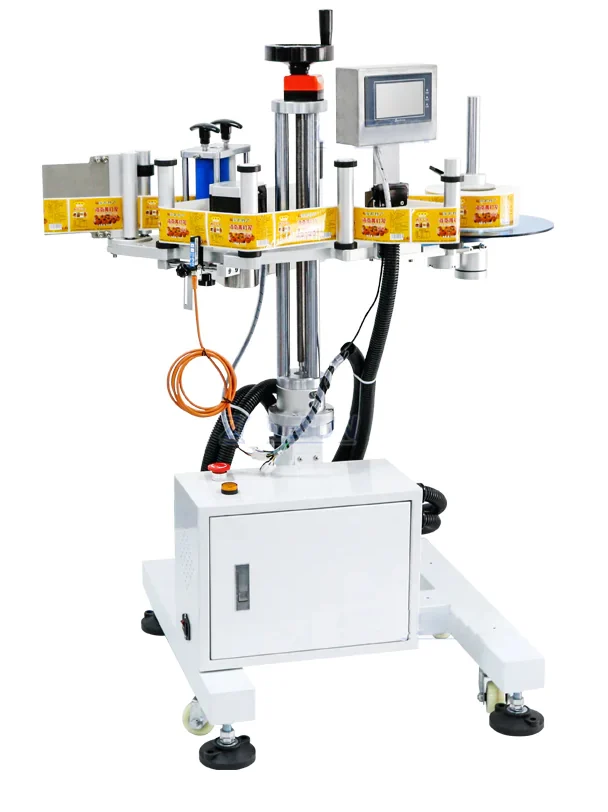
A label applicator can be supplied as a standalone head or integrated into an existing line where products are already presented correctly. This can be useful when the product handling is already solved but label application needs to be automated.
Retrofit projects need a stable mounting point, a product trigger, space for the label roll and access for threading labels. If the product is not controlled, a complete labelling system may be more reliable.
A label applicator is often the label head or application module. A labelling machine normally includes product handling, controls and guarding around the application head.
Yes, when product presentation, space and controls are suitable.
Yes. They can be configured for cap, lid, carton or closure tamper-evident applications.
Use these pages to move from research into the correct machine range.
Send product photos, container dimensions, label size, label roll details and target output. Lancing UK can advise the correct labeller type before quotation.
A standalone applicator dispenses a label, but it does not automatically space, orient or stabilise products. Before retrofitting a head, confirm that the conveyor and controls can present each product at the same speed and reference position.
| Integration item | Questions to resolve | Evidence |
|---|---|---|
| Mounting | Is the frame rigid, adjustable and accessible for roll changes? | Conveyor drawings, photographs, dimensions and required head reach |
| Product detection | Can a sensor see every product at a repeatable point? | Pack material, colour, transparency, spacing and proposed sensor position |
| Speed coordination | Does the conveyor run steadily or vary, stop and restart? | Normal and minimum speed, control method and live cycle video |
| Label path | Can the roll be loaded and threaded safely without interference? | Core, roll diameter, web width, unwind direction and available clearance |
| Wipe-down | Is the product supported against application pressure? | Surface, stiffness, filled condition and marked label position |
| Controls | What signals, inhibits, alarms or confirmations are required? | Electrical interface description and expected line behaviour |
Set the product trigger from a physical reference, run representative products through normal stops and restarts, and measure the leading-edge position and skew. Repeat at the lowest and highest intended conveyor conditions and after a roll change. If product spacing or orientation varies before the applicator, correct the handling source rather than masking it with repeated timing changes.
No. The frame, product control, available space, speed, sensor position and operator access must be suitable for the required head and label position.
The product sensor identifies when a pack reaches the application point. The label sensor controls each label on the liner. Both functions must be set for the application.
The product trigger may need a suitable sensing arrangement and position. Test the actual pack because transparent or reflective surfaces can affect detection.
Provide label and liner width, label length, gap, core, outside roll diameter, unwind direction, material, adhesive and whether the label is transparent.
Choose a complete machine when the existing conveyor cannot space, orient or stabilise products, or when the application needs dedicated belts, guides, feeders or transfer control.
The applicator must be mounted, triggered and enabled in relation to a stable product path. Define the mechanical datum, signals and safe access before selecting the final head or stand.
| Mounting | Side/top/bottom position, adjustment, vibration and roll access |
|---|---|
| Product trigger | Target, gap, sensor type and mounting position |
| Label sensing | Construction, gap, web path and calibration |
| Line controls | Enable, ready, fault, label end and product ownership |
| Wipe/contact | Surface, pressure, product movement and label size |
| Safety/maintenance | Guarding, isolation, threading and cleaning access |
Use the guide to prepare evidence for this part of the project.
Next guideUse the guide to prepare evidence for this part of the project.
Next guideUse the guide to prepare evidence for this part of the project.
Next guideUse the guide to prepare evidence for this part of the project.
Send the product, label and line information so the most suitable labelling route can be checked before quotation.