Print & Apply Labelling Machines
Home/Products/Print & Apply Labelling Machines/Print & Apply Labelling Machines

Print & Apply Labelling Machines

Print variable information and apply labels to products, cartons or cases.

Real-time print/apply range

Application overview

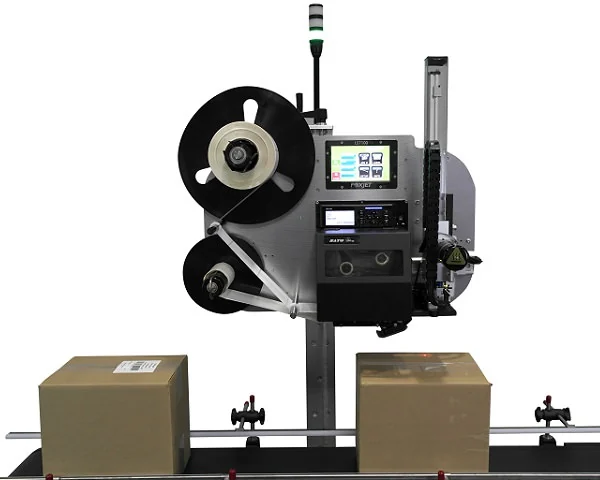
Print and apply labelling machines print variable data such as barcodes, batch details, addresses or logistics labels and apply the label directly to the pack.

  • Real-time variable data printing
  • Barcode, date, batch and address labelling
  • Suitable for cartons, cases, trays and products
  • Applicator selection matched to product movement
Print & Apply Labelling Machines
Specification

Typical specification starting points

Final specification depends on real samples, label material and the production environment.

Typical usePrint and apply labelling
Automation levelAutomatic / integrated
Container typeProducts, cartons and cases
DataBarcode and variable information

Specification points for this labelling range

Print & Apply Labelling Machines should be selected around product handling, label roll data, required label position and the real production speed needed after changeover. A good specification should also confirm operator access, cleaning, guarding, conveyors, coding and spare parts before the machine is ordered.

  • Confirm product dimensions, material, weight and stability.
  • Check label roll core, outside diameter, label gap and unwind direction.
  • Agree acceptable placement tolerance and repeatability.
  • Plan integration with filling, capping, coding, inspection or end-of-line handling where required.

Enquire about the Print & Apply Labelling Machines

Send your sample details, label roll specification and required output. Lancing UK can advise whether this configuration is suitable or whether another labelling route would be better.

Engineering detail

Specify variable-data printing, application and confirmation as one system

Print-and-apply machinery is used where label information is created at the time of production or despatch. The application may involve a product, tray, carton or case, but the engineering questions are consistent: where the data comes from, what is printed, how the label reaches the moving pack and what confirmation is required before the item continues.

How the application process works

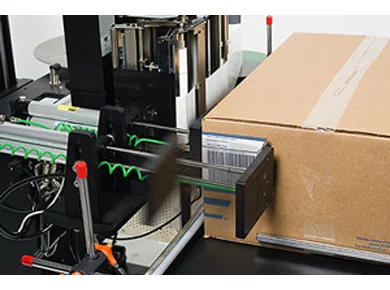
The system receives or selects data, prints a label and presents it to an applicator. A product trigger and line controls coordinate the application with the pack position. The physical transfer method must suit the available face, movement and surface; the data process must also manage missing information, print faults, label-out conditions and any required response from connected equipment. These control states should be agreed rather than inferred from a printer demonstration.

When another technology is more suitable

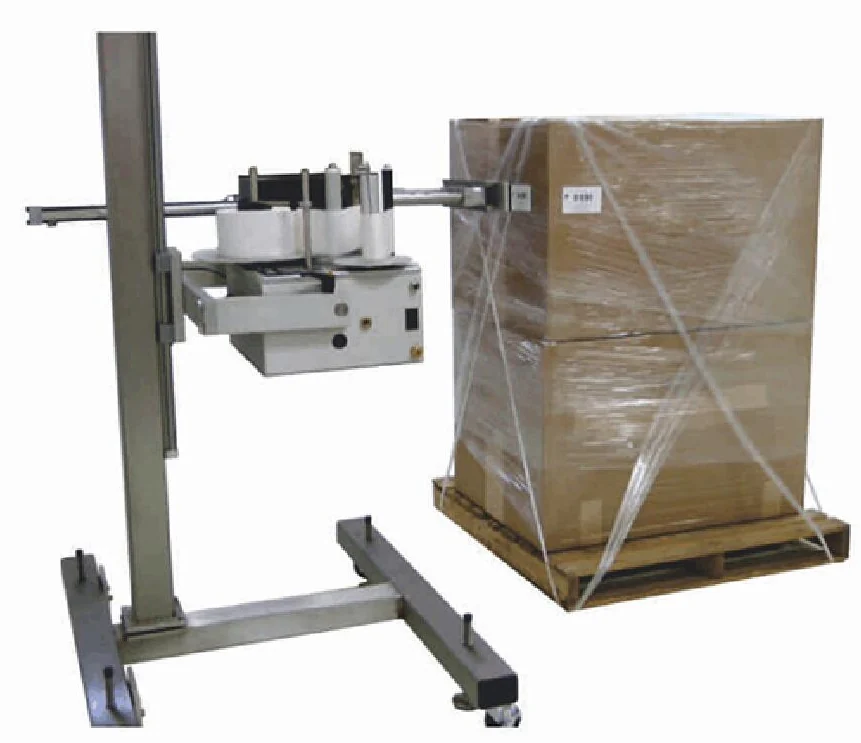
Use a plain label applicator when all labels are pre-printed and no variable information is required. Use a dedicated pallet system for multi-face or long-reach end-of-line applications, and use a weigh print-and-apply route where the printed content depends on the measured pack weight.

Project evidence to send

  • Representative smallest and largest products in production condition
  • Normal label rolls with roll and unwind details
  • Marked examples showing the required label position
  • Normal output, batch pattern and changeover range
  • Line layout, conveyor interfaces, coding and inspection requirements
Specification and test

Inputs that determine handling, sensing and acceptance

Unknown values should be confirmed from the real product and label rather than replaced with catalogue assumptions.

Data and formatSource system, label template ownership, variable fields, barcode type where used, batch logic, network or discrete interface and the required behaviour when data is unavailable.
Print consumablesLabel dimensions, material, adhesive, core and roll diameter, plus ribbon or other print consumables where applicable. Confirm the expected print content and density with real samples.
Application faceProduct dimensions, speed, spacing, surface, label position and whether the pack stops or moves during application. The available face determines the practical applicator method.
Confirmation and rejectsState whether the project needs print completion, label-present confirmation, barcode reading, print-quality checking, reject handling or higher-level data reconciliation. These functions are not interchangeable.
Sample trial

Use production-condition evidence

Use realistic data and production media. Print the longest and densest expected label formats, then apply them to representative products at the intended line condition. Inspect print readability and physical placement as separate acceptance items. Create agreed fault conditions—such as label-out or missing data—only through the safe test procedure defined for the project, and confirm the expected line response.

Changeover and upkeep

Protect repeatability after setup

Keep the print path, sensors, applicator face, peel edge and product trigger clean. Consumable changes should follow the approved threading and calibration procedure. Maintain template and data-interface change control so that a print-quality or content issue is not mistaken for a mechanical application fault. Critical spares should reflect the selected printer and applicator configuration.

Quotation brief

Describe the complete line role

Include upstream and downstream equipment, conveyor direction and height, normal stops, operator access, utilities and any control signals. State which items are essential and which are future options.

Buyer questions

Questions to resolve before ordering

What is a print-and-apply labelling machine?

It prints variable information onto a label and then applies that label to a product, carton, case or other pack as part of a controlled production or logistics process.

What information must be defined before quotation?

Define the label size and material, printed fields, data source, product dimensions, application face, normal line condition, interface requirements and the confirmation or reject functions required.

Is barcode scanning the same as print verification?

No. A barcode reader, print-quality verification, label-present sensor and data reconciliation perform different checks. State which result the process needs and what should happen after a failure.

Can the system connect to production or warehouse data?

Integration may be possible, but the interface, data ownership, templates, network or signal method and fault behaviour must be defined for the actual project.

How should the system be tested?

Use realistic variable data, production labels and representative products. Test print readability, physical placement, line timing and agreed fault responses as separate acceptance items.

When is a standard label applicator more suitable?

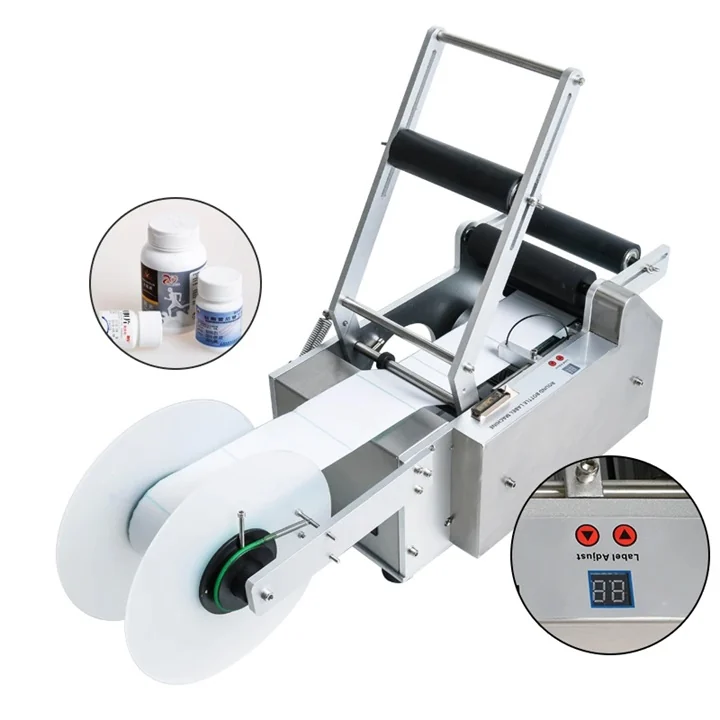
A standard applicator is usually simpler when every label is already printed and the machine only needs to dispense and apply it at a repeatable position.

Ask Lancing UK to review this application

Send product samples or dimensions, the label-roll specification, marked placement examples, normal output and the surrounding line details.

Acceptance planning

Accept the data transaction and physical application together

A successful test follows one job from source data through template selection, printing, application, inspection and completion. Include missing data, printer not ready, unreadable code and interrupted-cycle scenarios in the agreed scope.

Test conditionWhat to prove
Correct jobProduct or order identity maps to the intended template
Print resultHuman-readable text and code meet the agreed check
Apply resultLabel reaches the defined surface and position
Failure responseStop, alarm, reject or hold behaves as agreed
Reprint controlDuplicate or stale labels are prevented or reconciled

Prepare a representative machine trial

Send the minimum, maximum and most difficult products with production-quality label rolls and the intended placement reference.

Buyer questions

Further questions about print-and-apply labelling

Print-and-apply performance depends on data control and product tracking as much as on the mechanical applicator.

Where should variable label data come from?

The data source should be the system authorised to identify the product, order, case or pallet. It may be a production system, warehouse system, line controller or approved local recipe, but ownership and update rules must be unambiguous.

Define which system creates the data, which fields the printer receives and what happens when required data is missing or late.

Print verification checks whether the printed information or code is present and readable. Application verification checks whether a label was transferred to the intended product in the required position. A successful print does not prove successful application, and a label-present sensor does not prove the code is correct.

Specify each proof separately and define the response to each failure.

How are a printed label and the correct product kept together?

The line needs a controlled relationship between the product trigger, print job, label queue and application point. If products can be removed, accumulated, reversed or overtaken between identification and application, the tracking method must account for that movement.

Fault and restart tests should prove that stale or duplicate labels cannot be applied after an interruption.

What should happen after a printer fault or rejected label?

The agreed sequence should isolate the affected product and prevent the next queued label being applied to the wrong item. Recovery may require clearing a printed label, reconciling the product queue, reprinting under control and confirming the first good product after restart.

Document operator actions and system states so recovery does not rely on memory during a production stop.

Need an answer for a specific labelling application?

Send the product, label and line details to Lancing so the answer can be checked against the real pack rather than treated as a generic machine assumption.

Verification route

Data selection, printing, label transfer, barcode reading and formal verification are separate stages. The failure response and retained evidence should be agreed before the applicator and reject method are fixed.

Contact us