Why does machine cost, labels, downtime, changeover, spares, service and support matter?
It affects machine choice, label accuracy, line speed and the risk of rework. It should be confirmed before equipment is quoted.
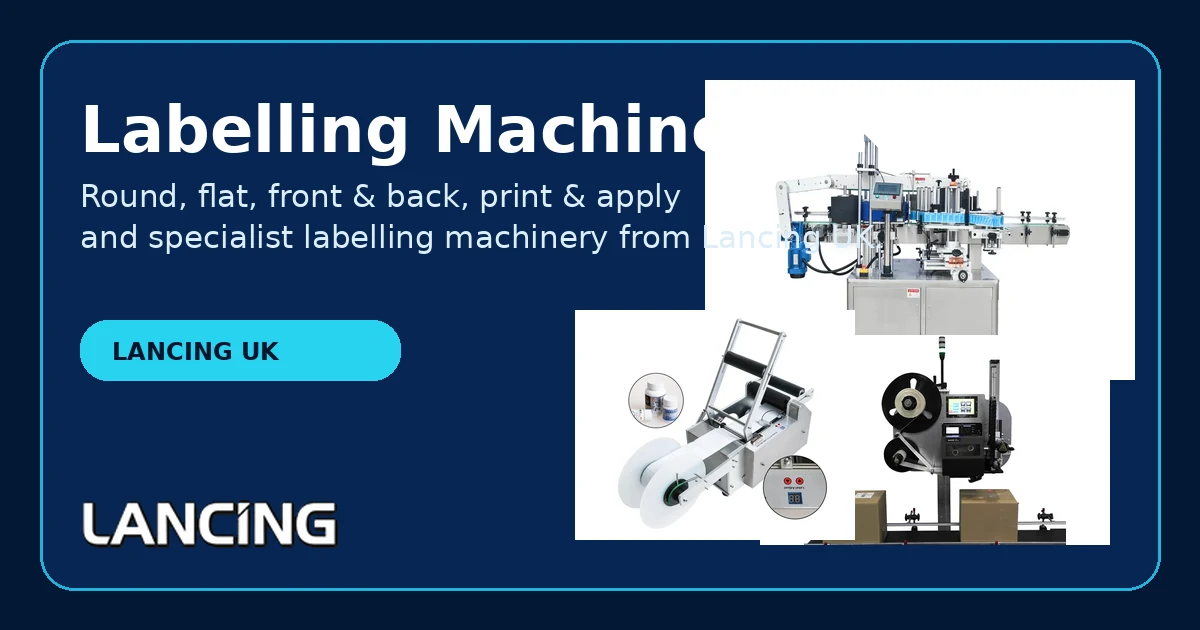
The purchase price is only one part of labelling automation. Changeover time, label waste, rework, spares and downtime all affect total cost.
The purchase price is only one part of labelling automation. Changeover time, label waste, rework, spares and downtime all affect total cost. It is important because machine cost, labels, downtime, changeover, spares, service and support can change the required label head, product handling, sensor choice, conveyor layout, operator access and acceptance test.
Many labelling quotations fail to capture the difference between a machine that can apply a label during a demonstration and a machine that will run reliably with live products, live labels and real operators. The details below help turn a broad enquiry into a specification a supplier can work with.
Choose the simplest machine that will still control the product correctly. Round containers generally need reliable rotation and wrap pressure. Flat, oval or rectangular containers need side control and repeatable label-head timing. Flat products, boxes and pouches need stable presentation to the label head. Case and pallet applications often depend more on data integration and print quality than on the applicator alone.
When comparing suppliers, check what is included: product handling, conveyors, sensors, printer integration, installation, training, spares and aftercare. A lower machine price can become expensive if the application needs extra controls or support after delivery.
It affects machine choice, label accuracy, line speed and the risk of rework. It should be confirmed before equipment is quoted.
Confirm pack dimensions, label roll details, label position, output target, surface condition and any coding, inspection or conveyor integration requirements.
Yes. Lancing UK can review product and label information and recommend a suitable labelling machine route for the application.
Use these pages to compare equipment routes and prepare a better enquiry.
Compare labelling routes for round, oval, square and shaped bottles.
RelatedAutomatic inline bottle labelling options for production environments.
RelatedApply labels to bottles, boxes, trays, pouches, cases and pallets.
RelatedStart with pack format, label position, output and support needs.
RelatedUnderstand what affects machinery pricing.
RelatedSend samples and project details for advice.
Send the application details and samples so the correct machine route can be checked before quotation.
Two labellers with similar headline functions can have different ownership costs once product handling, changeover, line stops, label waste, operator time, spares and support are included. Build the comparison around the site’s real production mix.
Record the people needed to load products, replenish labels, monitor faults, inspect output and perform changeovers. Include waiting and rework, not only the label cycle.
Count the formats, frequency, change parts, setting records and time needed to return to accepted quality. A flexible line can be more valuable than a faster single-format line.
Track label waste during threading, set-up and faults, plus products requiring rework or disposal. Poor presentation can create downstream complaints even when the machine remains running.
Consider access to spares, diagnostics, documentation, training, backups and competent support. The cost of an unresolved fault may exceed the part cost.
Use the table to turn a broad requirement into evidence that can be reviewed during sample trials, FAT, installation and handover.
| Area | What to establish | Practical check |
|---|---|---|
| Acquisition | Machine, options, conveyors, guarding, coding, inspection and integration | Compare like-for-like scope and exclusions |
| Installation | Delivery, positioning, utilities, commissioning and site preparation | Identify site work before order |
| Operation | Labour, labels, consumables, utilities and routine inspection | Use representative production schedules |
| Changeover | Downtime, samples, waste, cleaning and format records | Include high-SKU and seasonal production |
| Maintenance | Wear parts, planned service, backups and specialist support | Define criticality and response needs |
| Quality/downtime | Rework, rejected output, missed despatch and line interruption | Use site evidence where available, not invented assumptions |
Continue with the pages that address the next technical or commercial decision.
Understand what changes a quotation.
ChangeoverReduce settings drift and avoid repeated trial-and-error.
RecoverabilityProtect settings, backups, parts and maintenance knowledge.
SupportDiscuss installation, training, spares and aftercare.
Send the product, label and line information so the most suitable labelling route can be checked before quotation.