Spacing
Provide a reliable gap so one product cannot trigger both heads as a single long object.
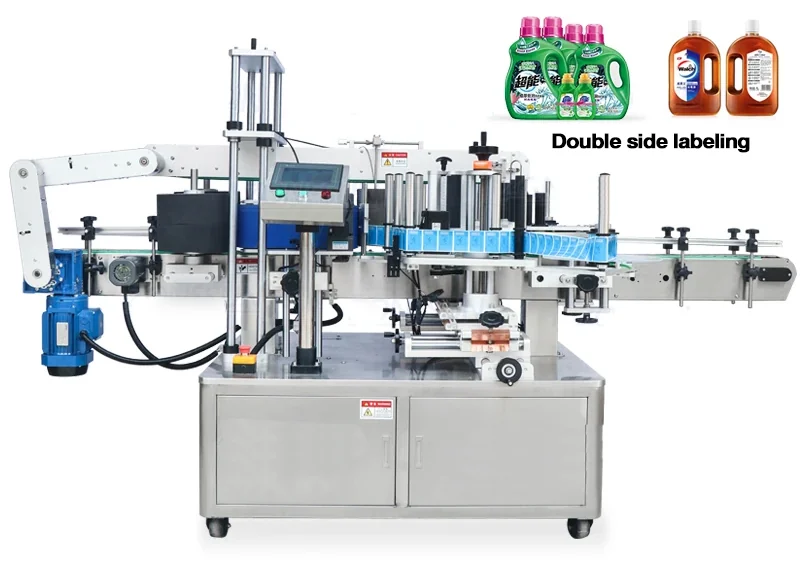
A twin-side labeller must keep the pack square and stable as both label heads apply labels. Guides, spacing and product handling have a direct effect on label accuracy.
Many front and back systems can run one label head or both label heads depending on the job. This helps when one product needs only a front label and another needs front and rear labels.
Clear labels and high-gloss materials may require specific label sensors. Check label stock before the machine is specified.
Send product and label details to Lancing UK and the most suitable labelling route can be checked before quotation.
Two independent label heads can only create a repeatable front-to-back relationship when the pack reaches them with the same orientation, side position and pitch. The container-handling system is therefore part of the labelling accuracy.
Flat and rectangular packs may present a clear side datum, while oval or shaped bottles can rotate unpredictably unless controlled. Record handles, seams, cap features, base notches and printed decoration that could be used as an orientation reference. The selected device must not deform a soft pack or cover the label panel.
Front and back labels may have different dimensions, gaps, artwork orientation or materials. Provide separate roll drawings and identify which head applies each label. If both labels are supplied on one roll for a semi-automatic process, confirm the pitch relationship and the sensor method.
Measure each label from a product datum and also define the relationship between the two labels. A pair can be individually within tolerance yet look visibly misaligned when the pack is viewed from above. Agree top-edge, centreline or artwork alignment and use marked samples at the trial.
Provide a reliable gap so one product cannot trigger both heads as a single long object.
Support the pack through both application points without covering the label area.
Record guide, head, sensor and orientation settings for every approved format.
Use the line-layout guide for conveyor and spacing decisions and the automatic twin-side labeller page for the principal machine route.