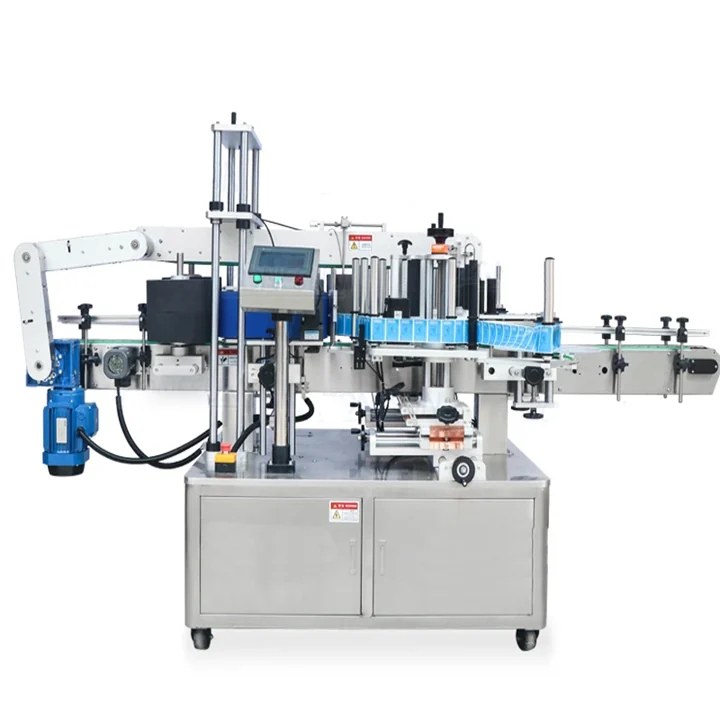
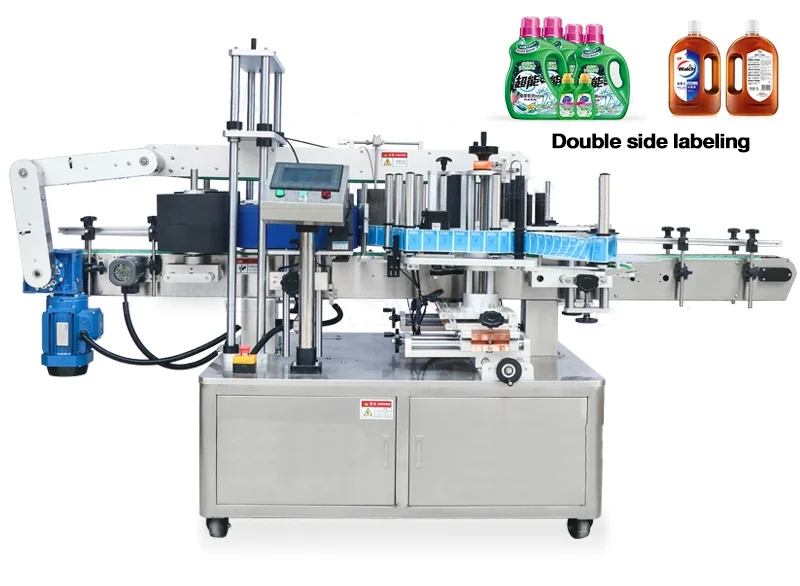
Automatic Twin Side Labeller
Home/Products/Front & Back Labelling Machines/Automatic Twin Side Labeller

Automatic Twin Side Labeller

Front and back labelling for flat, oval, square and selected round containers.

Front and back range

Application overview

A twin-side labelling machine for applying front and rear labels in one pass. It is suited to products where label position and presentation are critical on both faces of the pack.

  • Single-side or double-side operation
  • Front and back label heads
  • Bottle alignment and product handling options
  • Designed for flat, oval, square and selected round containers
Automatic Twin Side Labeller
Specification

Typical specification starting points

Final specification depends on real samples, label material and the production environment.

Typical useFront and back bottle labelling
Automation levelAutomatic
Container typeFlat, oval, square or selected round
LabelsFront, back or both
Machine video

See the labelling format in motion

This video asset is included in the site package so the page can show buyers the labelling action without relying on external embeds.

Specification points for this labelling range

Automatic Twin Side Labeller should be selected around product handling, label roll data, required label position and the real production speed needed after changeover. A good specification should also confirm operator access, cleaning, guarding, conveyors, coding and spare parts before the machine is ordered.

  • Confirm product dimensions, material, weight and stability.
  • Check label roll core, outside diameter, label gap and unwind direction.
  • Agree acceptable placement tolerance and repeatability.
  • Plan integration with filling, capping, coding, inspection or end-of-line handling where required.

Enquire about the Automatic Twin Side Labeller

Send your sample details, label roll specification and required output. Lancing UK can advise whether this configuration is suitable or whether another labelling route would be better.

Engineering detail

Specifying two label heads around one stable product path

An automatic twin-side labeller is normally selected for flat, oval, square and selected round containers that need separate labels on opposite faces. The main engineering task is to keep the pack oriented and controlled while both label heads apply to the same moving product. The two labels may be different sizes, materials or positions, so each head and sensor must be specified and tested independently.

How the application process works

Products are spaced and guided into a controlled path, commonly using side support so the same faces remain presented to the label heads. Each head dispenses its label from the liner at the correct product trigger, and wipe-down or contact devices complete adhesion. The container must leave without turning, bouncing or being squeezed out of shape. For oval or flexible bottles, the side-control setting can have a direct effect on label position and appearance.

When another technology is more suitable

Use wrap-around labelling for a single label around a round container. Use a single side applicator when only one face is labelled. Where the pack must index through three or more panels, a shaped-container system may give more controlled presentation.

Project evidence to send

  • Representative smallest and largest products in production condition
  • Normal label rolls with roll and unwind details
  • Marked examples showing the required label position
  • Normal output, batch pattern and changeover range
  • Line layout, conveyor interfaces, coding and inspection requirements
Specification and test

Inputs that determine handling, sensing and acceptance

Unknown values should be confirmed from the real product and label rather than replaced with catalogue assumptions.

Container and orientationWidth, depth, height, filled weight, panel dimensions, taper, handle, cap position and the feature used to identify the front face.
Two label specificationsFront and rear label dimensions, roll cores, outside diameters, unwind directions, materials, gaps and whether either label is transparent.
Alignment requirementReference point for each label, acceptable relationship between front and rear artwork, permitted skew and whether orientation to a seam, handle or closure is required.
Production lineNormal output, product spacing, conveyor interfaces, changeover range, coding, inspection, rejects, guarding and space to load both label rolls safely.
Sample trial

Use production-condition evidence

Use production containers that represent moulding and fill-weight variation. Mark the front face and the reference point for each label. Run both labels together, then inspect each face independently and as a pair. Repeat the trial after changeover, because a machine can place one label correctly while the opposite head or product-control setting remains outside the agreed result. If clear film is used on either side, test that roll with its own sensor.

Changeover and upkeep

Protect repeatability after setup

Keep side belts, guide rails, peel edges, rollers and sensors clean. Uneven belt wear or excessive guide pressure can turn, mark or deform the product and may appear as a timing fault. Record head positions and guide settings for each SKU, and confirm the product path before altering label timing. Both unwind paths should be checked after a roll change.

Quotation brief

Describe the complete line role

Include upstream and downstream equipment, conveyor direction and height, normal stops, operator access, utilities and any control signals. State which items are essential and which are future options.

Buyer questions

Questions to resolve before ordering

What products suit an automatic twin-side labeller?

Flat, oval, square and selected round containers are typical starting points when separate front and back labels are required. Final suitability depends on orientation, stability and the available label panels.

Do the front and back labels need to be the same size?

Not necessarily. Each label head can be treated as a separate application, but both label rolls, positions and unwind directions must be supplied and tested.

How is front-to-back alignment checked?

Define a physical reference on each face and the visual relationship required between both labels. Inspect the labels independently and together across a representative sample sequence.

Can transparent labels be applied on one or both sides?

Transparent labels may be possible with a suitable sensing arrangement. Each actual label-and-liner combination should be checked because the two rolls may not behave identically.

Can one machine handle several container shapes?

A range can often be accommodated, but guide positions, side control, label-head positions and product orientation must remain practical. Large geometry changes may require change parts or a different route.

When is wrap-around labelling better?

Wrap-around is normally simpler for one continuous pressure-sensitive label on a stable cylindrical container that can rotate consistently.

Ask Lancing UK to review this application

Send product samples or dimensions, the label-roll specification, marked placement examples, normal output and the surrounding line details.

Two-label control

Control the product datum before judging front-to-back alignment

A twin-side machine uses two label heads around one product path. The important question is not simply whether both labels are dispensed; it is whether the container is held against a repeatable datum so each label and the relationship between them remain consistent.

Orientation and side support

Flat, oval and shaped containers can move or yaw between guides. Review the filled product, the least stable format and the surface available for belts or guides before defining label position.

Independent label rolls

Provide full details for both rolls. The front and rear labels may differ in size, gap, liner, material or transparency, so each head and sensor must be assessed against its own production stock.

Wipe-down and presentation

Application pressure must secure the label without deforming a flexible pack or disturbing its orientation. The pack should remain supported through the complete application zone.

Acceptance pointReference to defineHow to check it
Front label positionPhysical edge, panel or centre line on the productMeasure or use an approved marked sample
Rear label positionIndependent rear referenceCheck position without assuming the front label proves the rear setting
Relationship between labelsRequired vertical and circumferential relationshipInspect both faces on the same product after a representative run
Skew and wipe-downPermitted visual result and edge adhesionInspect across the full label area on each handling extreme
Changeover repeatabilityAccepted settings and datum for each format familyRepeat a normal changeover and retain the first accepted pack
Clear-label detectionActual liner, gap and material for each rollTest both heads using production labels

What the supplied demonstration shows

The page video shows the product controlled between opposing side assemblies while labels are presented from both sides of the machine. It illustrates the twin-side arrangement and close product support. It does not establish the final container range, placement tolerance or output, which must be confirmed from samples and the agreed operating condition.

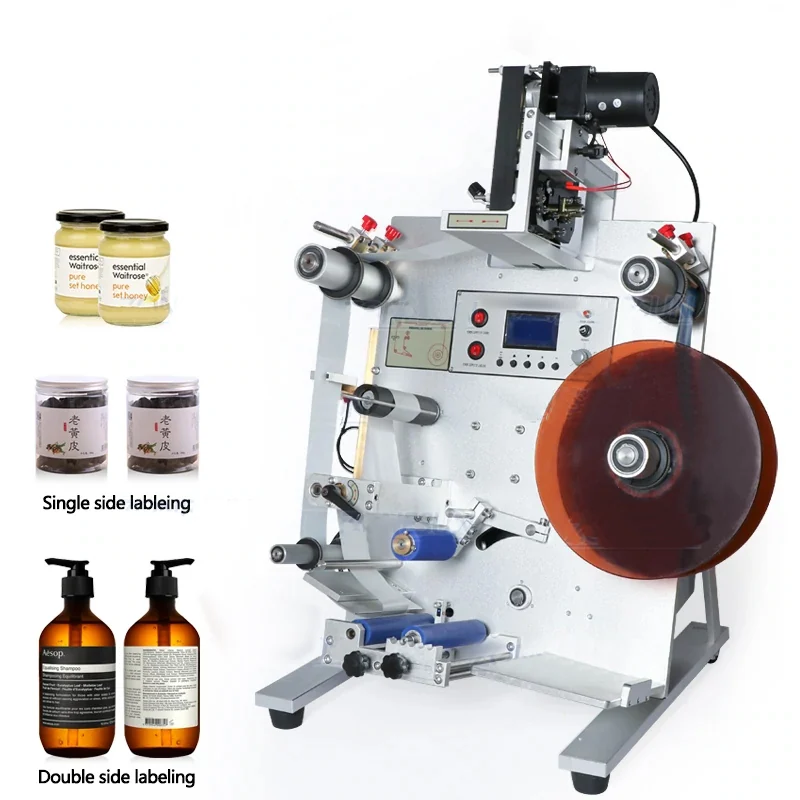
Compare the wider front and back labelling range, read the front/back selection guide, or use the specialist front and back labelling site. For lower-volume or reduced-footprint work, also review the compact twin-side labeller.

Define both label positions before the machine is configured

Send the product extremes, both production label rolls, marked placement references, normal output and line-layout information.

Acceptance planning

Prove front-to-back alignment from a stable product datum

Record the container face, side-guide or orientation feature used as the datum. Test both label heads independently, then judge the vertical and rotational relationship between the front and back labels on representative packs.

Test conditionWhat to prove
Smallest/least stable packGuide and top-hold control
Largest packHead adjustment and side clearance
Two label rollsCorrect front/back identity and unwind
Restart between headsProduct and label state remains known
Changeover repeatBoth labels return to the accepted relationship

Prepare a representative machine trial

Send the minimum, maximum and most difficult products with production-quality label rolls and the intended placement reference.

Buyer questions

Further questions about automatic twin-side labelling

Twin-side results are judged by each label individually and by the relationship between both labels on the same container.

How is the front-to-back placement datum chosen?

Choose a physical product feature that can be presented repeatably, such as a stable base, panel edge, mould feature or controlled orientation point. Measure both labels from that same reference so the acceptance test does not rely on an undefined visual centre.

If the pack itself varies, record the pack variation separately from the labeller placement result.

Why can oval or flexible bottles twist between the label heads?

An oval or flexible bottle can rotate when side guides, conveyor friction or top-hold pressure are uneven. The first label application can also change surface friction before the second label is applied.

Stable base contact, balanced guiding and testing at the intended fill condition are needed to prove that both faces remain presented.

Can each side use a different label size or material?

Separate label heads can often be configured for different front and rear labels, but each roll must remain within the verified machine and sensor capability. Different materials can release, stretch and wipe down differently, so both rolls should be included in testing.

Record the correct roll for each head and prevent an incorrect front or rear roll being loaded during changeover.

What should happen if one label head is not ready?

The control philosophy should prevent a product leaving the machine with an unintended missing label. Depending on the agreed process, the line may inhibit infeed, stop, reject the affected pack or require a controlled inspection response.

Define the behaviour for label end, web break, printer not ready and sensor fault before acceptance.

Need an answer for a specific labelling application?

Send the product, label and line details to Lancing so the answer can be checked against the real pack rather than treated as a generic machine assumption.

Next proof

Protect orientation through the complete conveyor section

Front-to-back alignment depends on product pitch, side control and the datum used before the first head. Review the line layout and shaped-pack guidance before fixing the orientation device or acceptance method.

Contact us