Bottles, jars and cans
Round packs may suit wrap-around labelling; oval or flat-sided containers may need controlled front-and-back presentation; jars with shoulders or taper require a marked label panel and representative trials.
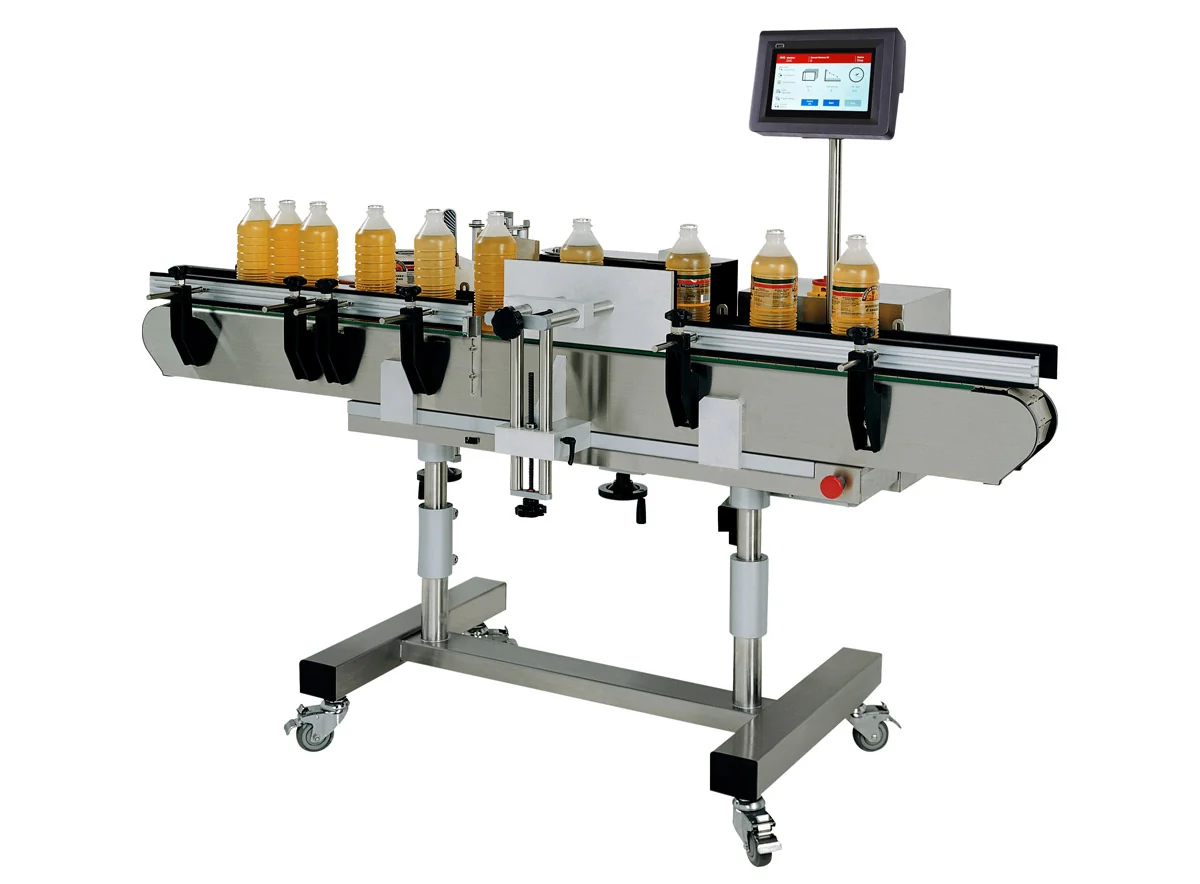
Labelling machinery for sauces, drinks, jars, bottles, trays and food packaging lines.
Food and drink projects often involve changing bottle sizes, washdown considerations, shelf presentation and batch coding. Round bottle labellers, top and bottom labellers and print and apply machines are common starting points.
These machines are common starting points for this application area.
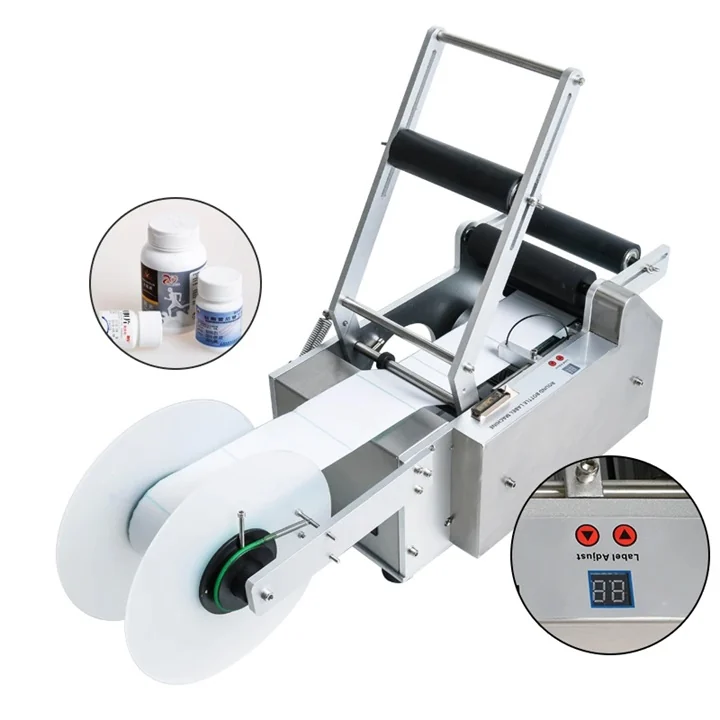
Bench-top wrap-around label applicator for round bottles, jars and small batches.
Space-saving automatic wrap-around labeller for round bottles on a conveyor.
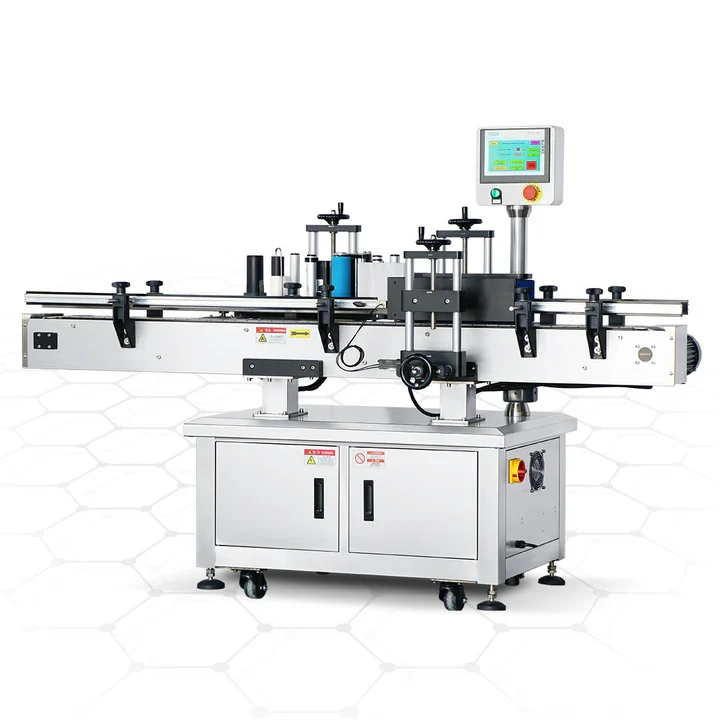
Inline wrap-around labelling for round bottles and jars at production-line speeds.
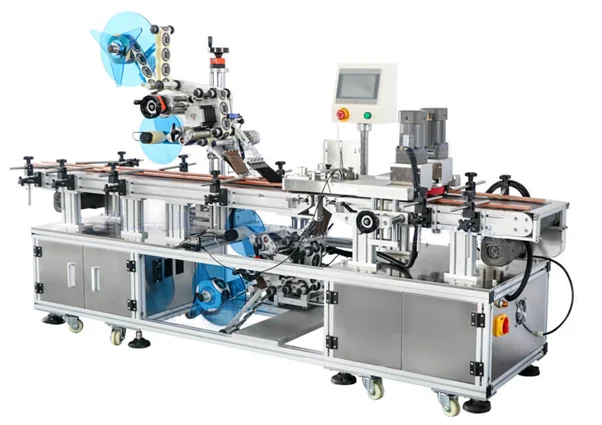
Apply labels to the top and underside of products in one controlled pass.
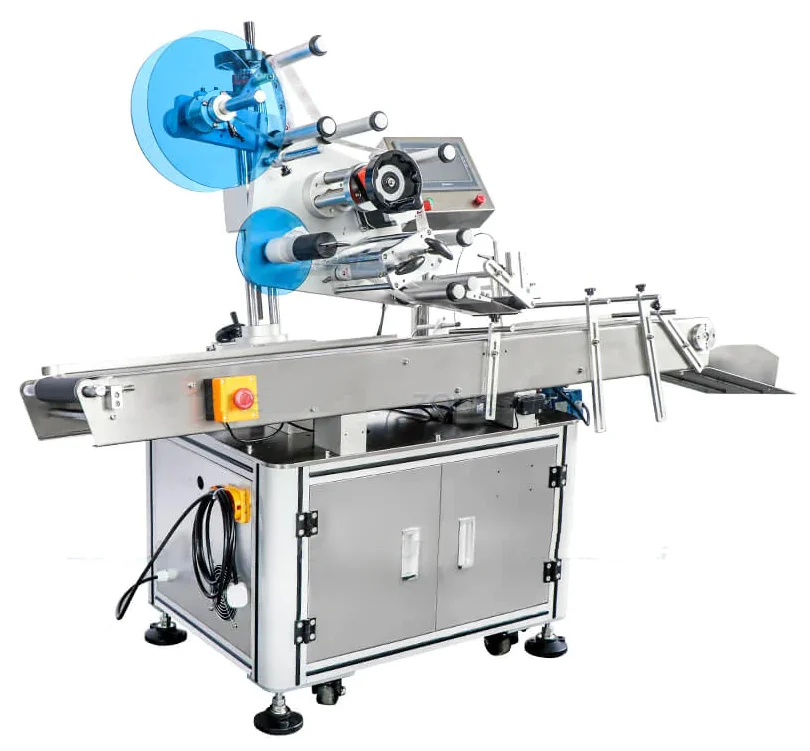
Automatic top and bottom label application for production conveyors.
Send the pack format, label details and output target and Lancing UK can advise a practical machine shortlist.
Food and drink containers can arrive warm, chilled, wet, greasy, dusty or lightweight. The label, adhesive, container and machine must be tested in the condition seen after filling, capping and any rinsing or cooling stage.
Round packs may suit wrap-around labelling; oval or flat-sided containers may need controlled front-and-back presentation; jars with shoulders or taper require a marked label panel and representative trials.
Condensation and product splash can reduce initial tack. Record the application temperature, time from filling and whether the container is dry at the labelling station.
Frequent flavours, pack sizes or allergen-managed production can make access, clean-down boundaries, recipe control and label reconciliation as important as headline speed.
| Buyer question | Evidence to provide | Why it matters |
|---|---|---|
| Will the container be cold or wet? | Filled samples at representative condition | Adhesive contact and product handling |
| Does the label carry a barcode or variable date? | Artwork, code position and verification requirement | Print, reading and reject scope |
| How often do formats change? | SKU list, dimensions and batch pattern | Change parts, recipes and operator time |
Use the label adhesion and environment guide before a production label run, and the line-layout guide where fillers, cappers, coders or inspection equipment connect directly to the labeller.