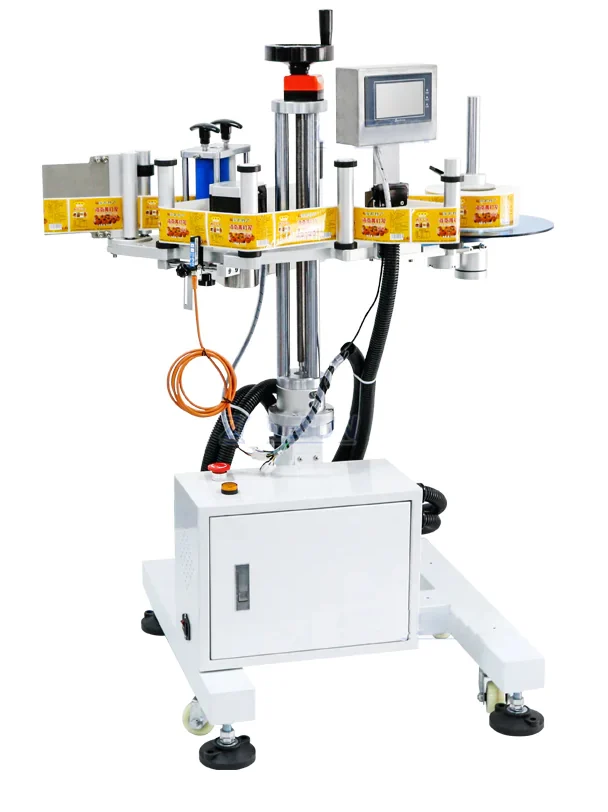
Decision summary
This comparison helps UK buyers decide between inline labelling machine and rotary labelling machine. It is most useful when the team needs a clear route before buying or specifying labelling machinery. The correct labelling route should be selected around the product, label, speed and line layout rather than by machine name alone.
A lower-cost machine can be the correct choice for controlled batches, while a more automated or integrated route can reduce handling and improve consistency when output, traceability or label accuracy are critical.
Comparison table
| Inline Labelling Machine | Usually suits applications where the product format, speed and label position match the strengths of this route. Check changeover, operator involvement and product control. |
|---|
| Rotary Labelling Machine | Usually suits applications where a different label transfer method, data requirement, pack shape or automation level is needed. |
|---|
| Best decision factor | Run test products where possible and compare setup time, waste, label tolerance, data requirements and support needs. |
|---|
| Risk to avoid | Choosing only by catalogue name can miss bottle stability, label material, roll direction, conveyor speed and access constraints. |
|---|
Questions to ask before buying
- What product dimensions and label positions will the machine need to cover?
- How many SKUs or label sizes will run in a normal week?
- Is barcode, date, batch or variable data printing required?
- Will the machine be standalone or integrated into filling, capping, conveyors or end-of-line packing?
- What support, spares and commissioning are included?
Next step
Lancing UK can review the product, label and line information and advise whether inline labelling machine, rotary labelling machine or another labelling route is more practical.