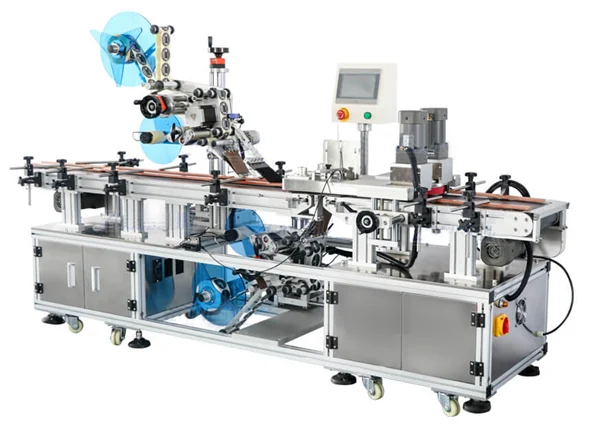
Where this labelling route fits
A tray labelling machine is normally specified when food, consumer goods and contract packing lines need repeatable label placement on trays, lids and flat packs. The correct configuration depends on container stability, label position, output target, changeover frequency and whether variable data or coding is needed.
For a reliable result, the product has to be controlled before the label is applied. Round containers usually need wrap control, flat or oval containers often need side belts or stabilisation, and logistics packs may require print-and-apply or tamp application rather than a simple wipe-on label head.
What to specify before buying
Useful information includes product width, depth, diameter and height, filled product weight, label size, label roll core, unwind direction, label gap, label material, target output, operating environment and any existing conveyor or coding equipment. Photos, videos and samples reduce uncertainty because small shape changes can affect label presentation.
Likely machine route
The likely route for this application is top labelling, top-and-bottom labelling or label applicators. Lancing UK can review whether a semi-automatic unit, compact automatic labeller, full conveyor-fed system or print-and-apply solution is the best fit for the application and budget.
When there are multiple SKUs, changeover time matters as much as maximum speed. A machine that is easy to set, clean and adjust can outperform a faster system if the line changes product sizes frequently.
Quote checklist
Send with your enquiry: product photos, dimensions, label roll details, label artwork position, speed target, available utilities, site layout and any required integration with filling, capping, coding or packing equipment.