What details are needed for a labelling machine for contract filling?
Useful details include product photos, container dimensions, label size, label roll core and unwind, target output, line layout and any coding or integration requirements.
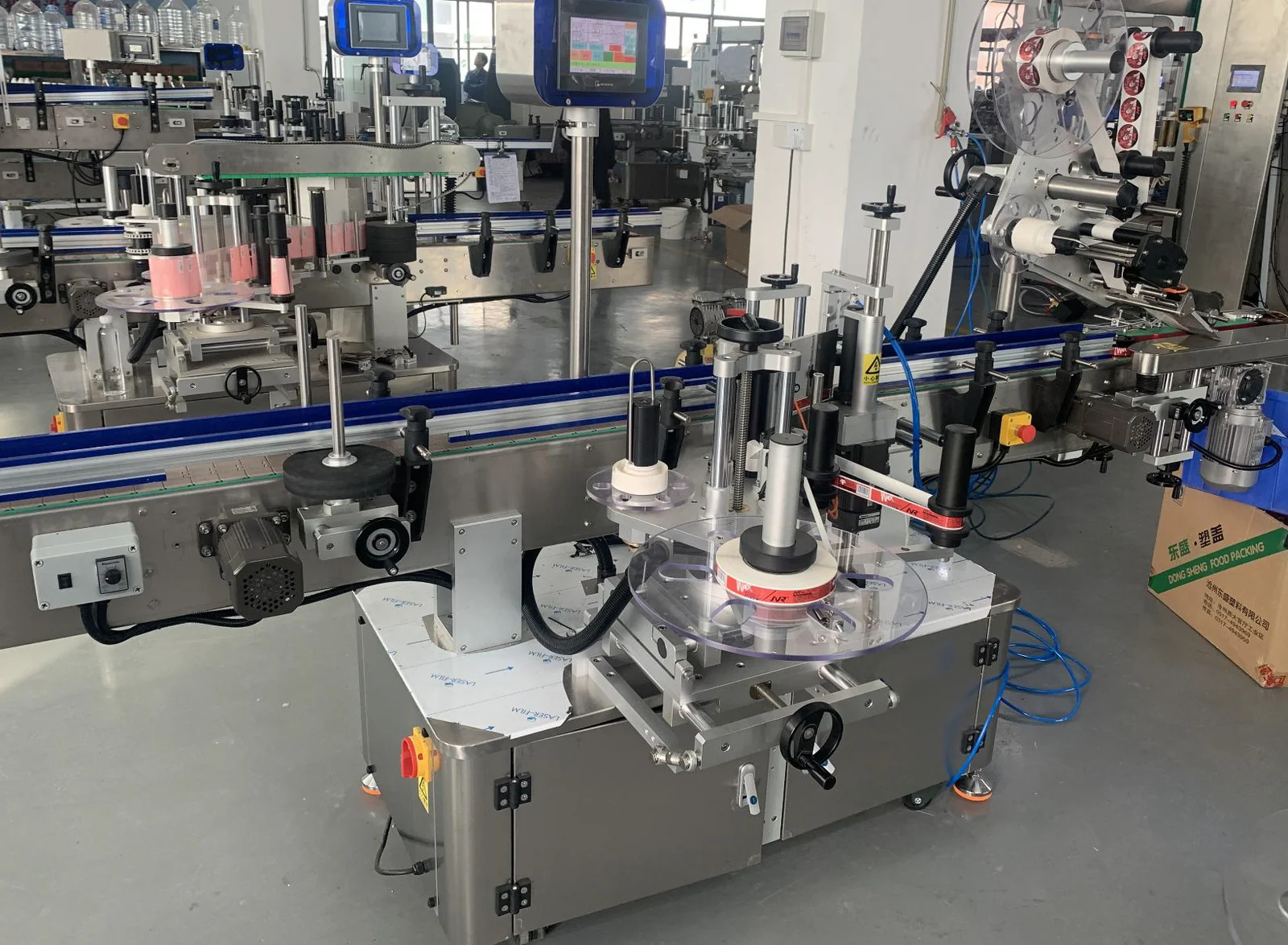
Labelling machines for contract filling and packing sites handling multiple SKUs, pack types, label sizes and changeovers.
A labelling machine for contract filling is normally considered when manufacturers, contract packers or logistics teams need repeatable label placement on multi-SKU bottles, jars, cartons and packs. The right machine is not chosen from the search term alone; it depends on the product shape, label position, speed target, container stability and how often the line changes between SKUs.
For a reliable result, the product has to be presented consistently before the label is applied. Round containers need controlled rotation or wrap belts, flat products need accurate triggering and side-guiding, while cartons, cases and pallets may need print-and-apply equipment for variable data or barcode labels.
Before comparing quotations, collect practical details that affect whether a semi-automatic, compact automatic or inline system is the best route. This reduces the risk of choosing a machine that looks correct in principle but struggles once real product variation, label material and output targets are introduced.
The likely route is flexible semi-automatic, compact automatic or inline labelling. Lancing UK can review product photos, label roll information and production targets before recommending a machine family. In many projects, the right answer is a controlled, practical configuration rather than simply the fastest possible labeller.
If there are frequent changeovers, small differences in container shape, label material or label position can affect uptime. That is why sample testing, label roll checks and clear acceptance criteria are useful before placing an order.
Use these pages to move from the search term to the correct machine family.
View the related labelling route and compare the specification.
RelatedView the related labelling route and compare the specification.
RelatedView the related labelling route and compare the specification.
RelatedSend product, label roll and target output details.
Useful details include product photos, container dimensions, label size, label roll core and unwind, target output, line layout and any coding or integration requirements.
Depending on the application, labelling equipment can be considered as a semi-automatic unit, compact automatic machine or conveyor-fed inline system.
Confirm the product shape, label position, pack stability, changeover range and output target before comparing machine types or quotations.
Send pack dimensions, label roll details, target output and photos. Lancing UK can help identify the correct labelling route.