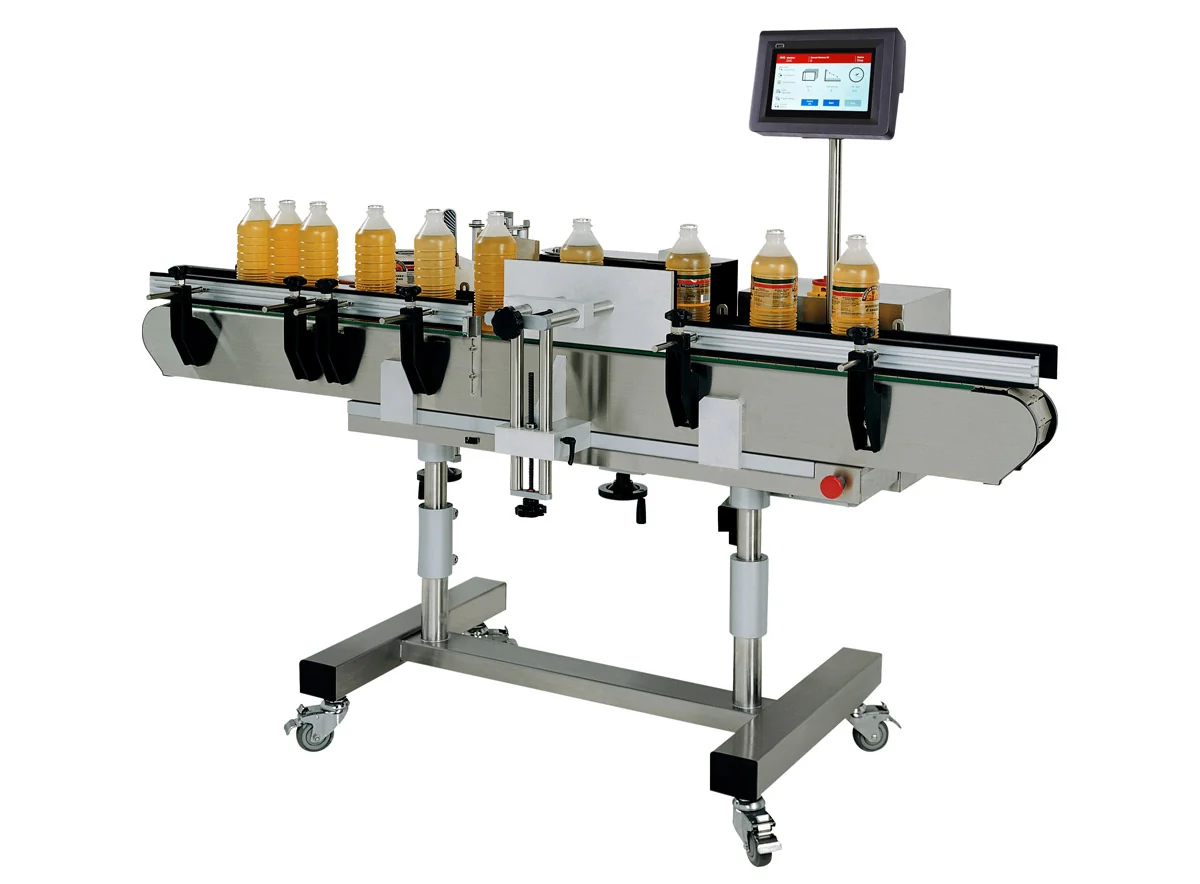
How do pack surface, temperature and moisture affect labelling?
Label application can be mechanically correct yet fail later if the pack surface is wet, contaminated, too cold for the selected adhesive, flexible or changing condition. The production surface and label stock therefore have to be tested together.
The short answer
Pressure-sensitive labels need compatible contact between the adhesive and the pack surface. Water, oil, powder, release agents, heavy texture, frost, condensation or a surface temperature outside the label supplier's application range can reduce initial tack or create bubbles and lifting. Machine pressure cannot correct an incompatible or contaminated surface.
Why does surface condition matter?
The label must make sufficient contact across the intended area. Dust and powder create a weak boundary layer. Oil or cleaning residue can prevent adhesive wet-out. Deep texture and moulded features reduce the actual contact area. Newly moulded or treated plastics may also need confirmation with the chosen label construction.
Define who is responsible for presenting a clean and dry pack to the labeller. If the product is rinsed, filled, cooled or handled immediately upstream, the line layout should allow the surface condition to stabilise where necessary.
How do temperature and condensation affect application?
Adhesives are designed for particular application and service conditions. A label that performs after application at room temperature may not apply reliably to a cold, wet or frozen surface. Condensation can form after a pack leaves a cold process even if it appeared dry earlier.
Use the label supplier's verified material data and trial the actual pack at the temperature and moisture condition expected at the labelling point. Do not substitute a storage-temperature claim for an application-temperature requirement.
What changes with flexible, squeezable or textured packs?
Flexible walls can move under wipe-down pressure, trapping air or changing the panel shape. A pouch may contain variable air or product distribution. A highly textured pack can leave only part of the adhesive in contact. The handling system, label flexibility and application pressure need to be considered together.
Use the filled product condition and include the least rigid acceptable pack in the trial. Excessive pressure can distort the pack without improving adhesion.
How should the surface and adhesion trial be run?
- Use production-condition packs, including the coldest, wettest or most contaminated condition that is considered acceptable.
- Use finished labels with the intended face material, adhesive, liner, printing and varnish.
- Apply labels at the intended machine set-up and line condition.
- Inspect immediate position, bubbles, wrinkles and edge contact.
- Recheck after the dwell time and storage conditions agreed with the label supplier.
- Include curved edges, seams, recesses or textured panels that reduce contact.
- Record cleaning or conditioning steps that are necessary for a passing result.
Common buyer questions
Can labels be applied to cold bottles?
They may be, but the label adhesive must be suitable for the application temperature and the surface must be in the condition used for testing. A cold pack that develops condensation can behave differently from a dry pack at the same nominal temperature.
What happens if condensation forms before or after labelling?
Moisture present during application can interrupt adhesive contact. Moisture forming later can also affect edges or printed surfaces depending on the label construction. The process should identify where condensation occurs and test the complete condition.
Can oily containers be labelled?
An oily surface can reduce adhesion and contaminate guides or rollers. The process may need upstream control or cleaning, and the label stock must be selected for the verified surface. A stronger wipe-down force alone is not a reliable remedy.
Does recycled plastic change label adhesion?
Surface composition and finish can vary between materials and suppliers. Suitability should be confirmed with the actual container batch and intended label rather than inferred from the general term “recycled plastic”.
Information to send for a difficult surface application
- Container material, supplier and production condition.
- Surface temperature and whether condensation, oil, powder or wash water is present.
- Label face material, adhesive reference, liner and artwork.
- Required storage, refrigeration, freezing, washing or handling after application.
- Photographs of lifting, bubbles or wrinkles and the time at which they appear.
- Production-condition samples for machine and adhesion testing.
Continue the labelling-machine decision
Use the page that matches the next technical or buying question, then send the confirmed information with your enquiry.
Clear-label sensor guide
Separate label detection from the adhesion and appearance test.
Round packsRound and wrap-around labelling
Review rotation and wipe-down for bottles and jars.
Pack geometryHandles, seams and recesses
Assess the physical features that interrupt label contact.
SamplesSend production-condition samples
Ask Lancing to review the real pack and label roll.
Ask Lancing to review the real product and label
Share photographs, dimensions, production-condition samples, label-roll details and the intended line arrangement so the guidance can be checked for the actual application.