Why does URS, project scope, product data, label data, utilities, validation and acceptance criteria matter?
It affects machine choice, label accuracy, line speed and the risk of rework. It should be confirmed before equipment is quoted.
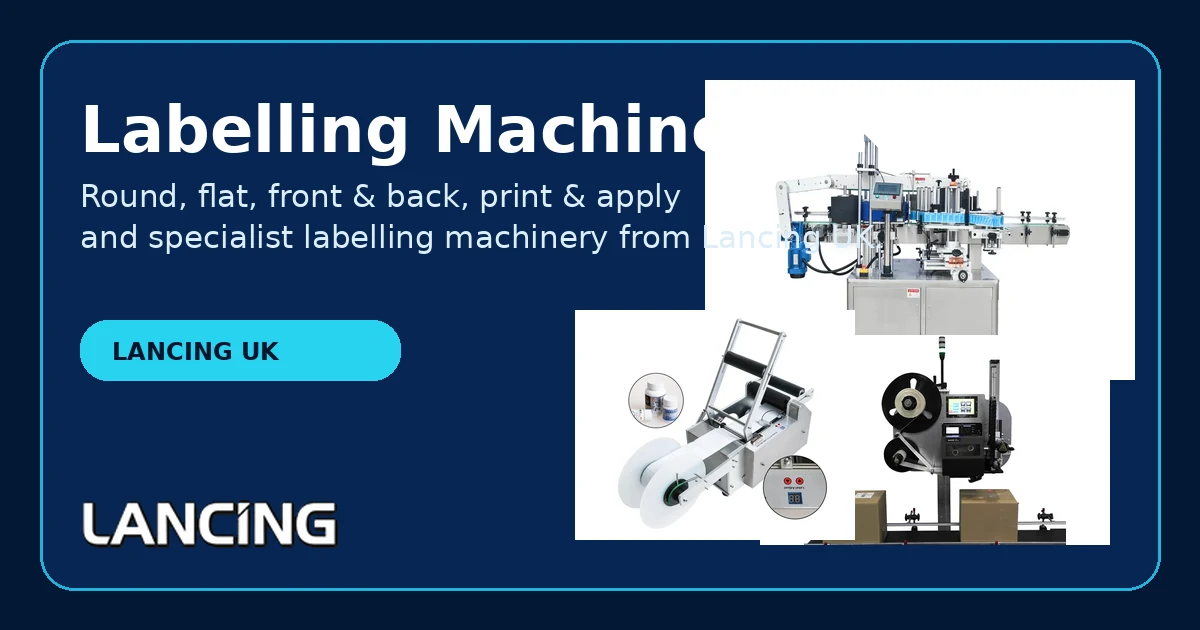
A clear URS helps suppliers quote the right labelling equipment and reduces the risk of missing key constraints until installation.
A clear URS helps suppliers quote the right labelling equipment and reduces the risk of missing key constraints until installation. It is important because URS, project scope, product data, label data, utilities, validation and acceptance criteria can change the required label head, product handling, sensor choice, conveyor layout, operator access and acceptance test.
Many labelling quotations fail to capture the difference between a machine that can apply a label during a demonstration and a machine that will run reliably with live products, live labels and real operators. The details below help turn a broad enquiry into a specification a supplier can work with.
Choose the simplest machine that will still control the product correctly. Round containers generally need reliable rotation and wrap pressure. Flat, oval or rectangular containers need side control and repeatable label-head timing. Flat products, boxes and pouches need stable presentation to the label head. Case and pallet applications often depend more on data integration and print quality than on the applicator alone.
When comparing suppliers, check what is included: product handling, conveyors, sensors, printer integration, installation, training, spares and aftercare. A lower machine price can become expensive if the application needs extra controls or support after delivery.
It affects machine choice, label accuracy, line speed and the risk of rework. It should be confirmed before equipment is quoted.
Confirm pack dimensions, label roll details, label position, output target, surface condition and any coding, inspection or conveyor integration requirements.
Yes. Lancing UK can review product and label information and recommend a suitable labelling machine route for the application.
Use these pages to compare equipment routes and prepare a better enquiry.
Compare labelling routes for round, oval, square and shaped bottles.
RelatedAutomatic inline bottle labelling options for production environments.
RelatedApply labels to bottles, boxes, trays, pouches, cases and pallets.
RelatedStart with pack format, label position, output and support needs.
RelatedUnderstand what affects machinery pricing.
RelatedSend samples and project details for advice.
Send the application details and samples so the correct machine route can be checked before quotation.
A user requirement specification should describe the outcome the site needs without prematurely fixing an unsuitable solution. Each important requirement should be clear enough to trace into a quotation, design decision and acceptance test.
Replace “accurate labels” with an agreed reference, test product and method for judging position. Replace “easy changeover” with the formats, access and records that must be demonstrated.
A supplier needs to know which requirements determine acceptance and which are preferences. This avoids late scope conflict and enables alternatives to be evaluated honestly.
List products, labels, filled condition, normal output, line interfaces, environment and changeover frequency. Include worst-case formats rather than only the launch SKU.
Give each requirement an identifier and record whether it is met by standard design, option, site provision, test or agreed exclusion.
Use the table to turn a broad requirement into evidence that can be reviewed during sample trials, FAT, installation and handover.
| Area | What to establish | Practical check |
|---|---|---|
| Product and label | Dimensions, materials, variation, position and representative samples | Sample review and format trial |
| Performance | Normal operating requirement and conditions that apply | Defined run using agreed products and labels |
| Integration | Conveyor, signals, coding, inspection and data interfaces | Signal simulation and installed-line test |
| Safety and site | Access, guarding boundary, utilities and environment | Design review and site-specific assessment |
| Operation | Changeover, cleaning, alarms, training and maintenance | Operator demonstration and document review |
| Documentation | Drawings, manuals, backups, records and required formats | Handover-document checklist |
Continue with the pages that address the next technical or commercial decision.
Capture the core product, label and line information.
AcceptanceTurn URS requirements into witnessed tests.
SiteValidate layout, access, utilities and interfaces.
HandoverDefine the records needed at project close-out.
Send the product, label and line information so the most suitable labelling route can be checked before quotation.