Why does label rolls, label gap, die-cut quality, core size, roll direction and web tension matter?
It affects machine choice, label accuracy, line speed and the risk of rework. It should be confirmed before equipment is quoted.
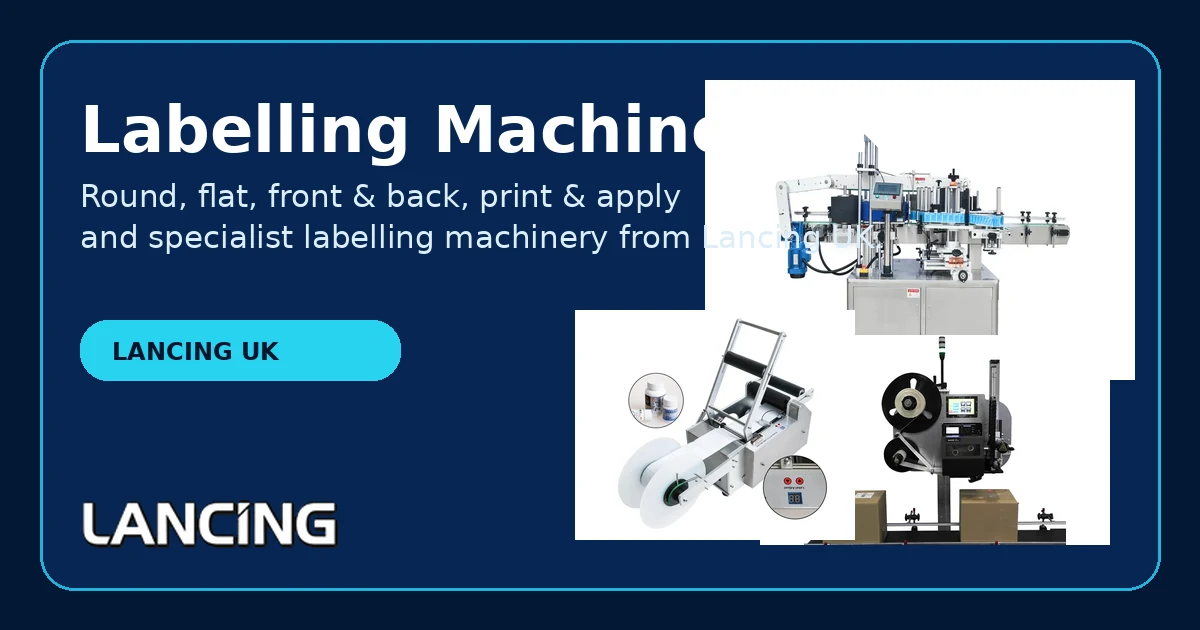
A labelling machine can only present labels as consistently as the roll allows. This checklist covers the roll details that should be checked before machinery trials and quotations.
A labelling machine can only present labels as consistently as the roll allows. This checklist covers the roll details that should be checked before machinery trials and quotations. It is important because label rolls, label gap, die-cut quality, core size, roll direction and web tension can change the required label head, product handling, sensor choice, conveyor layout, operator access and acceptance test.
Many labelling quotations fail to capture the difference between a machine that can apply a label during a demonstration and a machine that will run reliably with live products, live labels and real operators. The details below help turn a broad enquiry into a specification a supplier can work with.
Choose the simplest machine that will still control the product correctly. Round containers generally need reliable rotation and wrap pressure. Flat, oval or rectangular containers need side control and repeatable label-head timing. Flat products, boxes and pouches need stable presentation to the label head. Case and pallet applications often depend more on data integration and print quality than on the applicator alone.
When comparing suppliers, check what is included: product handling, conveyors, sensors, printer integration, installation, training, spares and aftercare. A lower machine price can become expensive if the application needs extra controls or support after delivery.
It affects machine choice, label accuracy, line speed and the risk of rework. It should be confirmed before equipment is quoted.
Confirm pack dimensions, label roll details, label position, output target, surface condition and any coding, inspection or conveyor integration requirements.
Yes. Lancing UK can review product and label information and recommend a suitable labelling machine route for the application.
Use these pages to compare equipment routes and prepare a better enquiry.
Compare labelling routes for round, oval, square and shaped bottles.
RelatedAutomatic inline bottle labelling options for production environments.
RelatedApply labels to bottles, boxes, trays, pouches, cases and pallets.
RelatedStart with pack format, label position, output and support needs.
RelatedUnderstand what affects machinery pricing.
RelatedSend samples and project details for advice.
Send the application details and samples so the correct machine route can be checked before quotation.
Automatic application relies on the web feeding predictably through guides, sensors and the peel plate. Printing can look correct while winding, liner or die-cut defects still cause web wander, false triggers, label lift or stoppages.
Check for telescoping, dishes, damaged edges and loose winding. The roll should sit squarely and unwind without side force that drives the web against a guide.
Labels should release cleanly without cuts through the liner, hanging matrix or adhesive strings. Inspect several metres and any splice area.
The liner must bend around the peel plate without cracking, curling excessively or changing tension. Confirm liner width and whether silicone treatment is consistent.
Temperature, humidity and storage orientation can affect adhesive, curl and static. Trial rolls should be conditioned in a way that represents production use.
Use the table to turn a broad requirement into evidence that can be reviewed during sample trials, FAT, installation and handover.
| Area | What to establish | Practical check |
|---|---|---|
| Telescoping or dished roll | Web tracks sideways and tension changes | Quarantine the roll and review winding with the converter |
| Adhesive ooze | Labels stick to adjacent layers, guides or rollers | Review adhesive, storage and winding pressure |
| Liner cuts | Web breaks at the peel plate or during acceleration | Inspect die-cut depth and reject affected stock |
| Variable gap | Sensor timing becomes inconsistent | Measure across the roll and review die-cut registration |
| Damaged edge | Web frays or catches a guide | Protect rolls during handling and avoid using damaged stock |
| Uncontrolled splice | Double thickness, missing gap or weak joint causes a stop | Agree splice construction and detection/handling policy |
Continue with the pages that address the next technical or commercial decision.
Record the dimensions and orientation needed by the label head.
SensingProve transparent and no-label-look constructions.
TestingBuild a representative sample set for machine trials.
ReviewSend the proposed label roll details to Lancing.
Send the product, label and line information so the most suitable labelling route can be checked before quotation.