Why does SKU changeover, cleaning access, label roll change and operator set-up matter?
It affects machine choice, label accuracy, line speed and the risk of rework. It should be confirmed before equipment is quoted.
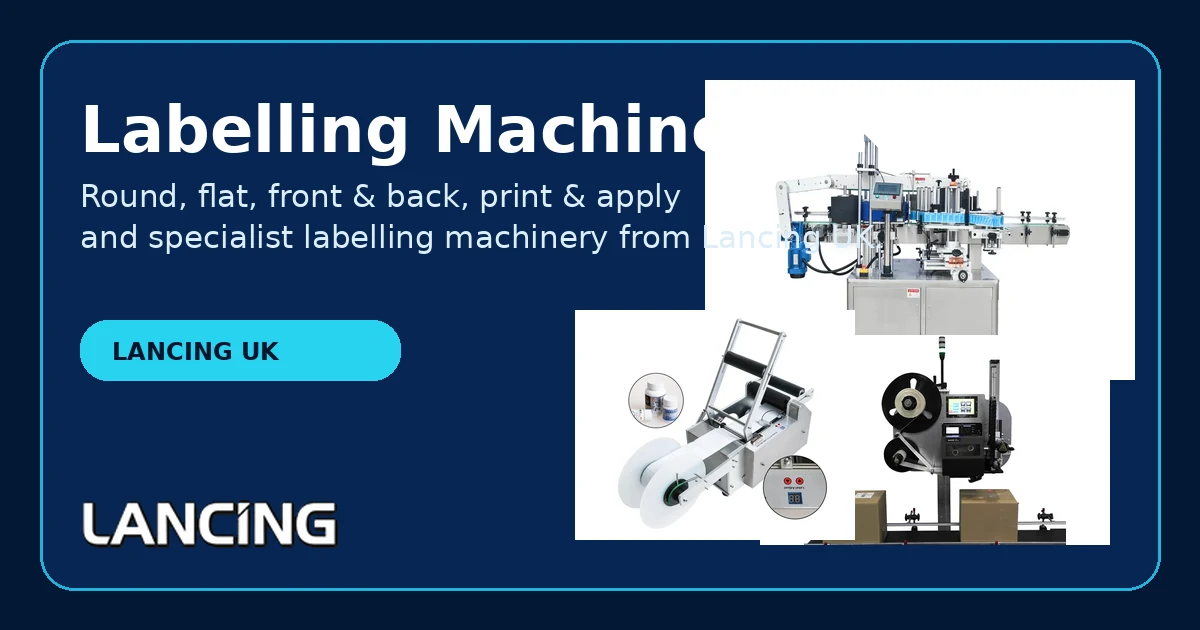
Cleaning and changeover details affect real production output, especially where labels, containers and products change frequently.
Cleaning and changeover details affect real production output, especially where labels, containers and products change frequently. It is important because SKU changeover, cleaning access, label roll change and operator set-up can change the required label head, product handling, sensor choice, conveyor layout, operator access and acceptance test.
Many labelling quotations fail to capture the difference between a machine that can apply a label during a demonstration and a machine that will run reliably with live products, live labels and real operators. The details below help turn a broad enquiry into a specification a supplier can work with.
Choose the simplest machine that will still control the product correctly. Round containers generally need reliable rotation and wrap pressure. Flat, oval or rectangular containers need side control and repeatable label-head timing. Flat products, boxes and pouches need stable presentation to the label head. Case and pallet applications often depend more on data integration and print quality than on the applicator alone.
When comparing suppliers, check what is included: product handling, conveyors, sensors, printer integration, installation, training, spares and aftercare. A lower machine price can become expensive if the application needs extra controls or support after delivery.
It affects machine choice, label accuracy, line speed and the risk of rework. It should be confirmed before equipment is quoted.
Confirm pack dimensions, label roll details, label position, output target, surface condition and any coding, inspection or conveyor integration requirements.
Yes. Lancing UK can review product and label information and recommend a suitable labelling machine route for the application.
Use these pages to compare equipment routes and prepare a better enquiry.
Compare labelling routes for round, oval, square and shaped bottles.
RelatedAutomatic inline bottle labelling options for production environments.
RelatedApply labels to bottles, boxes, trays, pouches, cases and pallets.
RelatedStart with pack format, label position, output and support needs.
RelatedUnderstand what affects machinery pricing.
RelatedSend samples and project details for advice.
Send the application details and samples so the correct machine route can be checked before quotation.
These activities can look similar because guards are opened and settings are touched, but they have different purposes and risks. A documented sequence protects safety, label quality and the ability to return to the approved format.
Normal stop, cleaning access and maintenance isolation are not interchangeable. The site procedure and machine instructions should define the required state for each task.
Mark normal operator settings and separate them from engineering adjustments. Uncontrolled changes to peel angle, sensor position or web path can hide the original cause of a problem.
Use recipe names, guide scales, label-head position, sensor set-up, printer template, change parts and an accepted sample. Photographs are useful when tied to a specific revision.
After cleaning or changeover, check guards, loose items, web threading, label identity, product identity, recipe and the first controlled sample before normal output.
Use the table to turn a broad requirement into evidence that can be reviewed during sample trials, FAT, installation and handover.
| Area | What to establish | Practical check |
|---|---|---|
| Label path | Adhesive, dust, liner fragments and roller condition | Clean with approved method; inspect before rethreading |
| Product guides/belts | Residue, wear, alignment and correct format position | Set from recorded references and confirm stable travel |
| Sensors | Lens/face cleanliness, mounting and selected recipe | Prove trigger on representative products and labels |
| Printer/coder | Media, ribbon, printhead condition and template | Check correct data and readable print |
| Change parts | Identity, condition, fasteners and storage | Fit the correct set and account for removed parts |
| Start-up sample | Label, product, position, adhesion, seam/pair and data | Compare with the accepted format reference |
Continue with the pages that address the next technical or commercial decision.
Build controlled format and cleaning records.
RestartValidate the first product after an interruption.
LabelsSeparate material defects from machine set-up.
SafetyConfirm access and isolation for actual cleaning tasks.
Send the product, label and line information so the most suitable labelling route can be checked before quotation.